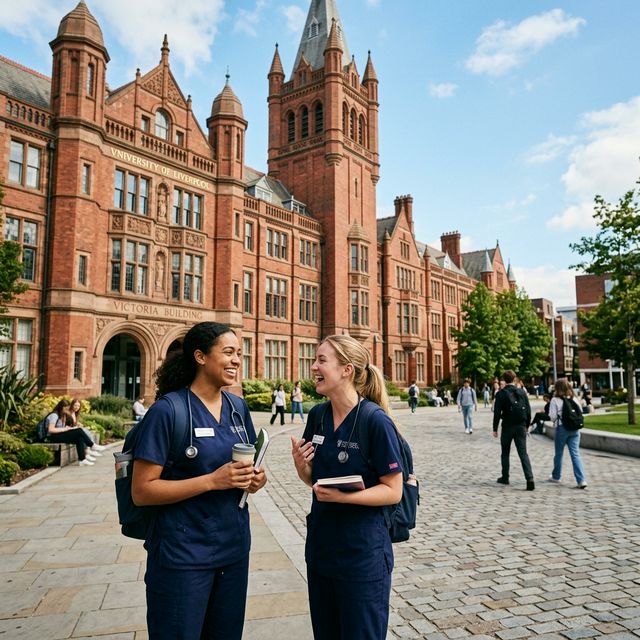
BSc Diagnostic Radiography
About this course
Diagnostic radiography is a healthcare profession concerned with producing high-quality medical images to assist in the diagnosis and management of disease and injury. Radiographers use a range of imaging technologies, including X-ray, computed tomography and magnetic resonance imaging, to create pictures of the inside of the body that clinicians use to detect fractures, tumours, infections and many other conditions. The role requires technical expertise in imaging equipment and radiation protection alongside strong clinical judgment, patient care skills and the ability to work effectively under pressure. At the University of Liverpool, this three-year full-time programme leads to qualification as a diagnostic radiographer and includes a year abroad, providing the opportunity to experience clinical and academic work in an international setting. Clinical placements form a substantial part of the programme, giving you supervised experience in real healthcare environments from early in your studies. You will study anatomy and physiology, radiation physics, imaging technology, image interpretation and patient care, building both the technical knowledge needed to produce high-quality images and the clinical skills needed to work sensitively with patients, many of whom may be unwell, anxious or in pain. On graduating, you will be eligible to apply for registration with the Health and Care Professions Council and work as a diagnostic radiographer within the NHS or independent healthcare sector. Radiographers are in consistent demand, and there are well-established career development pathways into specialist imaging roles, sonography, radiographic reporting, management and education. Some graduates also go on to postgraduate study in medical imaging, radiation therapy or healthcare management, developing expertise that supports progression to senior clinical or academic roles.
Syllabus & Modules
Typical curriculumStudent Satisfaction
National Student Survey - 40 respondents (73% response rate)
Similarly Ranked Alternatives


What comes next? 🎓
Choosing the right university starts with choosing the right school. Explore transparent, data-driven school profiles powered by official DfE statistics.
Explore Schools on WhatSchool.ai →