High Drop-out Rate Alert
25% of students drop out or transfer from this specific course. Consider asking why on an open day.
BSc Mathematics with Economics
About this course
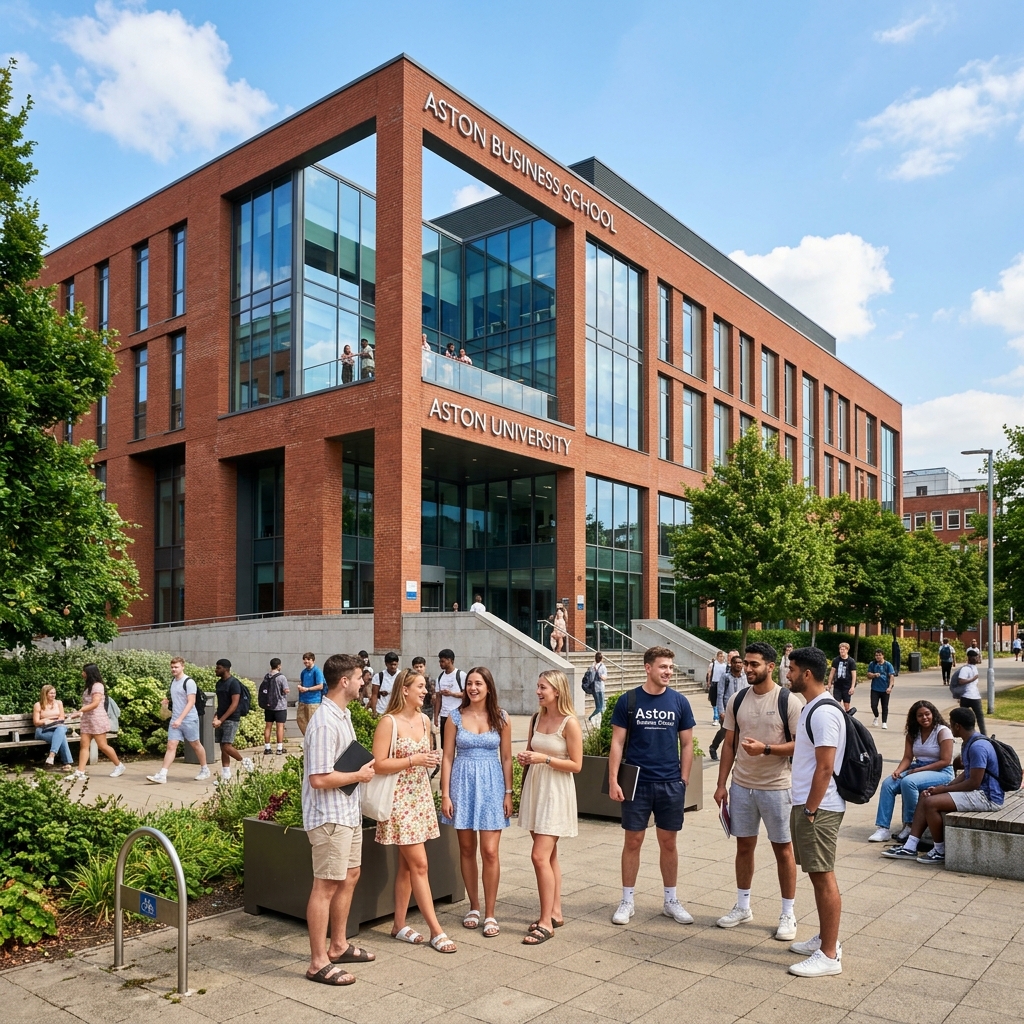
Mathematics with economics is a combination that equips you to engage rigorously with the quantitative foundations of economic thought. Mathematics provides the formal tools, including calculus, linear algebra, probability, statistics, and optimisation, that underpin the theoretical models economists use to understand markets, behaviour, and policy. Economics applies those tools to questions about how people, firms, and governments make decisions under scarcity, how markets allocate resources, why economies grow and fluctuate, and what interventions can improve welfare. Together, they produce a graduate who can think formally about economic questions and communicate findings with precision. At Aston University, this four-year, full-time programme includes a year abroad, giving you the opportunity to study mathematics and economics in a different academic and cultural environment. Aston has a strong applied tradition in both mathematics and business-related subjects, and the programme connects mathematical rigour with real-world economic questions, preparing you for roles where quantitative analysis is central. You will study pure and applied mathematics, covering topics including analysis, linear algebra, differential equations, and numerical methods, alongside economics modules covering microeconomics, macroeconomics, econometrics, public economics, and the economics of financial markets. The year abroad adds international breadth and personal adaptability to your degree. A typical entry tariff of 120 UCAS points reflects the mathematical preparation expected for entry. The programme develops strong quantitative skills alongside the ability to apply them to substantive questions about how the economy works. Employers in finance, consulting, and the public sector value graduates who can move fluently between formal modelling and real-world interpretation. Graduates work in investment banking, economic consultancy, financial analysis, data science, the civil service, and policy research. The combination of mathematical training with economic insight is in consistent demand across sectors. Many graduates also proceed to postgraduate study in economics, finance, or mathematics.
Syllabus & Modules
Typical curriculumStudent Satisfaction
National Student Survey - 10 respondents (92% response rate)
Similarly Ranked Alternatives


What comes next? 🎓
Choosing the right university starts with choosing the right school. Explore transparent, data-driven school profiles powered by official DfE statistics.
Explore Schools on WhatSchool.ai →