BA Interior Design
About this course
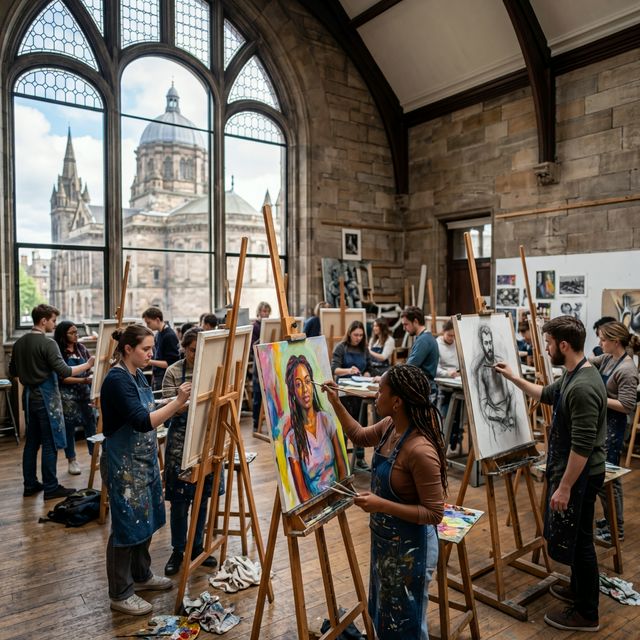
Interior design is concerned with the spatial, aesthetic, and functional quality of the interior environments in which people live, work, learn, and socialise. It goes beyond decoration, engaging with spatial planning, lighting, acoustics, materials, and the emotional and psychological effects that different environments produce on the people who inhabit them. Good interior design makes spaces work better for their users, whether that means a care home that supports the wellbeing of its residents, a workplace that enables productive collaboration, or a retail environment that communicates a brand's values clearly and attractively. At the University of Edinburgh, this four-year programme develops your creative and technical abilities in interior design within a research-active university environment. You will work in studios developing design concepts and translating them into fully resolved proposals, learning to represent your ideas through drawing, physical models, and digital visualisation. You will study the history and theory of interior design alongside its practice, developing an understanding of how interiors have been designed across different periods and cultures and what the major theoretical frameworks for thinking about space and design are. The programme includes a year abroad, giving you the chance to experience design education and practice in a different national context and to develop your professional perspectives through international exposure. Edinburgh's rich architectural and cultural heritage provides an exceptional environment for design study. Interior design graduates work in interior design consultancies, architecture practices with interiors teams, and in-house design departments within large property, retail, or hospitality organisations. Residential design, commercial and workplace design, hospitality and hotel design, retail design, and the design of healthcare and educational environments are all areas in which interior designers practise. Exhibition design, set design, and product design for interior spaces are adjacent fields. Some graduates develop independent practices, working with private clients or developing their own design identity. Others move into design management, project management, or procurement roles within the built environment sector. Postgraduate study in interior design or architecture is a further option.
Syllabus & Modules
Typical curriculumStudent Satisfaction
National Student Survey - 15 respondents (100% response rate)
Similarly Ranked Alternatives

What comes next? 🎓
Choosing the right university starts with choosing the right school. Explore transparent, data-driven school profiles powered by official DfE statistics.
Explore Schools on WhatSchool.ai →