BSc Geography and Oceanography
About this course
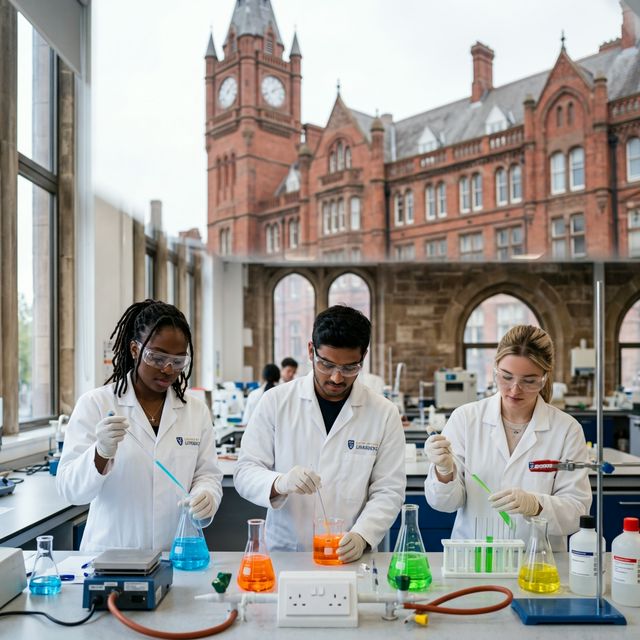
Geography and oceanography is a pairing that places the study of the ocean within the broader framework of environmental and human geography. Oceans cover more than two thirds of the Earth's surface, regulate climate, drive weather systems, sustain enormous biodiversity, and underpin the livelihoods of billions of people. Oceanography applies the tools of physics, chemistry, biology, and geology to understand how the ocean works, while geography brings the spatial, social, and environmental perspectives needed to connect ocean systems to human activity and planetary change. Together they form a discipline well suited to the challenges of the present century. At the University of Liverpool, this three-year full-time programme offers an unusually rich structural package. You will have the opportunity to undertake a placement year, spend a year abroad, and engage with work placements during the course, giving you substantial professional and international experience alongside your academic studies. Liverpool's location and its connections with marine science institutions in the region provide strong research links that feed into the teaching. You will develop skills in fieldwork, data analysis, modelling, GIS, and scientific communication, working across both physical and human dimensions of the discipline. The typical entry tariff of 120 points reflects the academic expectations of a programme that combines rigorous science with broader geographical enquiry. Graduates are well prepared for careers in environmental consultancy, marine science, oceanographic research, climate analysis, coastal management, fisheries, and the offshore energy sector. The combination of geographical and oceanographic training is valued by organisations working on climate adaptation, sustainability, and resource management. Many graduates also go on to postgraduate study, including taught and research degrees in oceanography, environmental science, marine biology, or climate science, opening doors to research careers and specialist consultancy. The professional experience embedded in this programme gives graduates a head start in a competitive and rapidly growing field.
Syllabus & Modules
Typical curriculumStudent Satisfaction
National Student Survey - 65 respondents (73% response rate)
Similarly Ranked Alternatives



What comes next? 🎓
Choosing the right university starts with choosing the right school. Explore transparent, data-driven school profiles powered by official DfE statistics.
Explore Schools on WhatSchool.ai →