BSc Economics
About this course
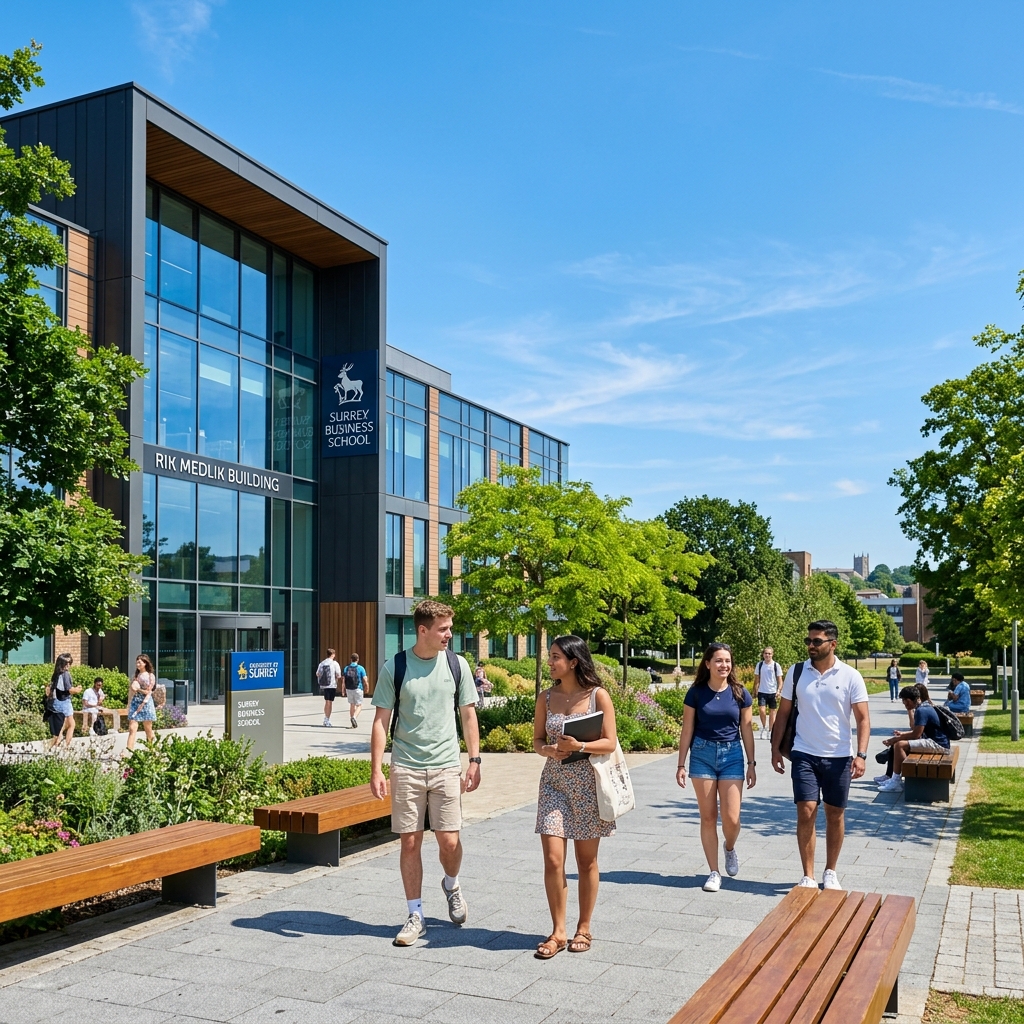
Economics is the study of how individuals, organisations and societies make decisions under conditions of scarcity, and what the consequences of those decisions are for welfare, distribution and growth. It is a discipline that combines careful theoretical reasoning with rigorous empirical analysis, and it addresses questions that matter profoundly: why some countries are rich and others poor, how markets fail and when governments should intervene, what drives inflation and unemployment, and how to design policies that improve human wellbeing. Economics develops a way of thinking that is analytical, precise and genuinely transferable. At the University of Surrey, this three-year full-time degree gives you a thorough grounding in both microeconomic and macroeconomic theory, alongside the mathematical and statistical methods that underpin modern economic analysis. You will study how markets work, how firms and consumers behave, how national and international economies are managed, and how economic data is collected and interpreted. The programme prepares you to work with real data and to apply economic reasoning to contemporary policy questions, building the digital and analytical skills that employers in finance, government, consultancy and research increasingly expect. Surrey integrates digital capability and AI literacy into its teaching, ensuring you graduate with the technical confidence that the modern professional environment demands. You will develop strong quantitative skills, the ability to construct and test economic arguments, and the capacity to communicate complex ideas clearly to non-specialist audiences. Independent research plays a growing role as you progress through the degree, culminating in a dissertation that demonstrates your ability to engage with an economic question in depth. Economics graduates are highly sought after across a wide range of sectors. Common pathways include financial services, economic consultancy, government and public policy, international organisations, the civil service, management consultancy, data analysis and academia. The rigour of economic training makes it one of the most versatile degrees available, and postgraduate study in economics, finance or public policy is a well-established option.
Syllabus & Modules
Typical curriculumStudent Satisfaction
National Student Survey - 25 respondents (73% response rate)
Similarly Ranked Alternatives

What comes next? 🎓
Choosing the right university starts with choosing the right school. Explore transparent, data-driven school profiles powered by official DfE statistics.
Explore Schools on WhatSchool.ai →