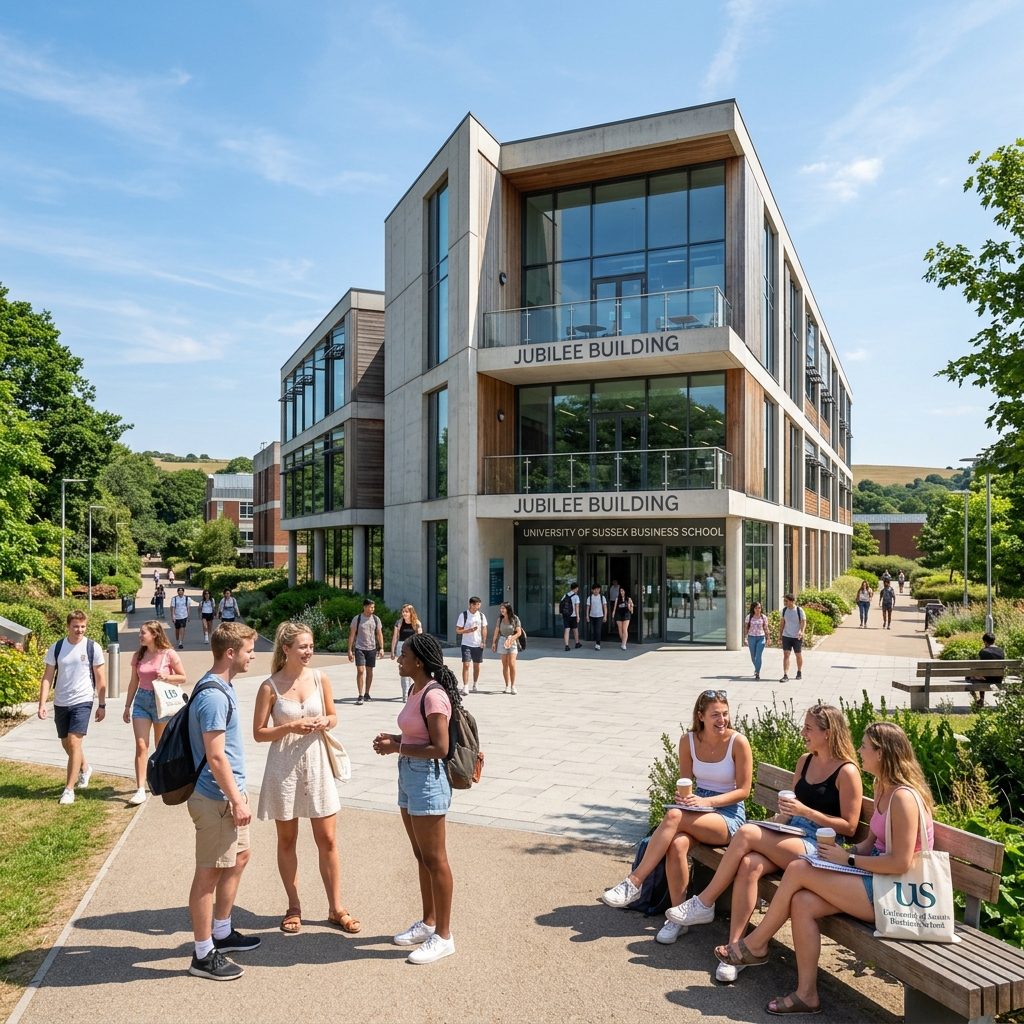
BSc Economics and Data Science
About this course
Economics provides rigorous frameworks for understanding how individuals, firms, markets and governments make decisions and how those decisions aggregate into patterns of growth, inequality, unemployment and trade. Data science, alongside it, equips you with the computational and statistical tools to work with the large, complex datasets that modern economic analysis increasingly depends on. The combination reflects a genuine shift in how economics is practised, as the availability of big data has opened new ways of testing theories, informing policy and understanding behaviour that were simply not possible a generation ago. At the University of Sussex, this three-year full-time programme includes a foundation year, a sandwich year, a year abroad and a work placement, giving you a rich combination of preparatory, academic and professional experience. The foundation year builds the mathematical and quantitative skills needed for economics at degree level, ensuring you can engage fully with both the economic theory and the data science methods that follow. Through the main programme, you will develop expertise in microeconomics, macroeconomics, econometrics, statistical modelling, programming, machine learning and the application of data analysis to real socioeconomic questions. The course gives you the practical skills, knowledge and confidence to tackle real-world challenges, from constructing socioeconomic policy to assessing individual behaviour, using digital and big data tools throughout. Graduates with this combination are sought across a wide range of sectors. The pairing of economic reasoning with data skills is particularly valued in financial services, technology firms, consultancy, government and regulatory bodies, central banks, think tanks and international organisations. Career roles include economist, data analyst, data scientist, policy researcher, financial analyst and management consultant. Further study at master's level in economics, data science, econometrics or public policy is a natural next step for those who want to specialise or pursue research careers.
Syllabus & Modules
Typical curriculumStudent Satisfaction
National Student Survey - 200 respondents (79% response rate)
Similarly Ranked Alternatives

What comes next? 🎓
Choosing the right university starts with choosing the right school. Explore transparent, data-driven school profiles powered by official DfE statistics.
Explore Schools on WhatSchool.ai →