
High Drop-out Rate Alert
25% of students drop out or transfer from this specific course. Consider asking why on an open day.
MChem Chemistry (with an industrial placement year)
About this course
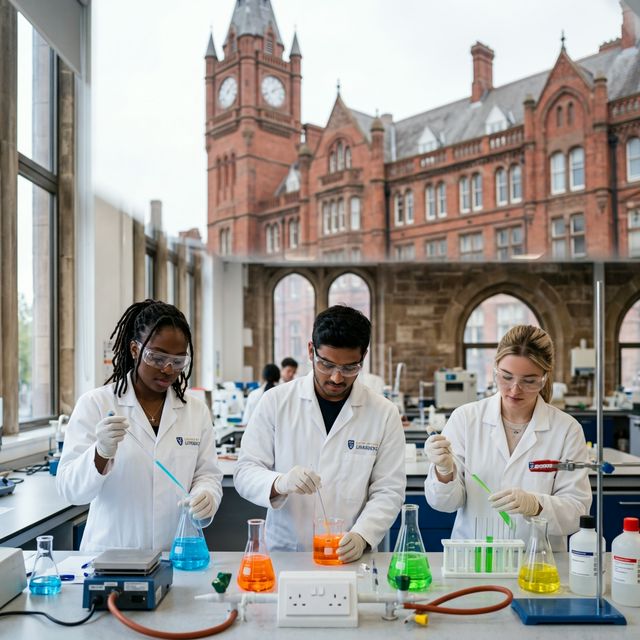
Chemistry is the science of matter and transformation, concerned with the structure of atoms and molecules, the bonds that hold them together, and the reactions that change them into something new. It underpins the development of medicines, materials, fuels, and technologies that have changed the course of human history, and it continues to be central to solving the scientific challenges of our time, from developing greener energy sources to designing drugs for diseases that currently have no cure. At the University of Sussex, this four-year, full-time programme includes both a foundation year and a year of professional experience, making it a particularly thorough route into the discipline for students who want to combine academic depth with real-world application. The foundation year provides a rigorous grounding in the core principles of chemistry before you move into the main degree. Through the programme you will study organic, inorganic, and physical chemistry, developing laboratory skills in synthesis, spectroscopy, and analytical techniques alongside the theoretical framework that explains how and why chemical processes work the way they do. You will learn to design experiments, interpret data, and communicate scientific reasoning clearly, building the habits of a careful and creative scientist. Chemistry graduates are among the most employable science graduates, and the discipline's applications are genuinely broad. Career paths include pharmaceutical research, materials development, environmental analysis, food science, chemical engineering, education, and science communication. Many graduates also pursue postgraduate research, and doctoral programmes in chemistry and related disciplines are a natural next step for those who want to work at the frontier of the subject. Sussex's commitment to sustainability as a scientific and social priority gives the programme a contemporary relevance that reflects the discipline's central role in addressing the challenges ahead.
Syllabus & Modules
Typical curriculumStudent Satisfaction
National Student Survey - 20 respondents (75% response rate)
Similarly Ranked Alternatives



What comes next? 🎓
Choosing the right university starts with choosing the right school. Explore transparent, data-driven school profiles powered by official DfE statistics.
Explore Schools on WhatSchool.ai →