High Drop-out Rate Alert
20% of students drop out or transfer from this specific course. Consider asking why on an open day.
BSc Chemistry
About this course
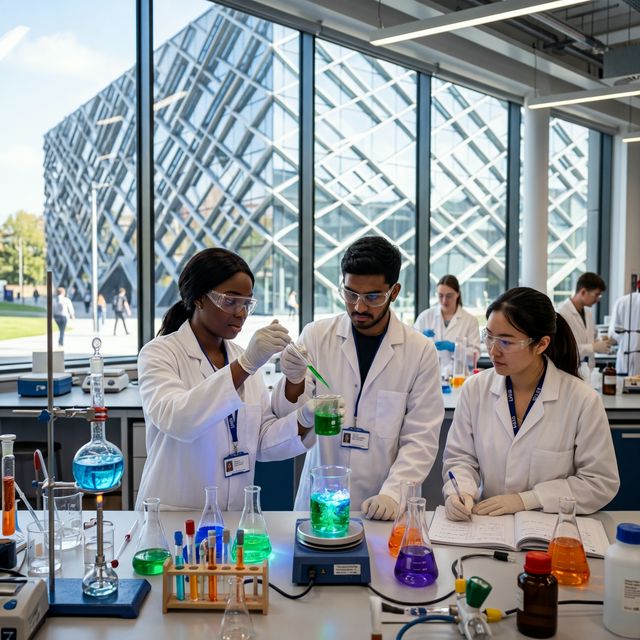
Chemistry is the science of matter and transformation, investigating the structures of substances, the forces that hold them together and the reactions that convert them into new forms. It is rightly described as a central science, because its principles underpin biology, physics, materials science, environmental science and medicine in ways that make it indispensable for understanding the natural world and for tackling the most pressing challenges of the century. At the University of Kent, this three-year full-time programme invites you into this fascinating world, developing both the theoretical knowledge and practical laboratory skills that a chemistry education demands. You will engage with the main branches of chemistry, including physical chemistry, organic chemistry, inorganic chemistry and analytical chemistry, developing an understanding of molecular structure, chemical bonding, reaction mechanisms and thermodynamics alongside the practical techniques used in research and industry. The programme connects these fundamentals to major contemporary applications, including the development of new pharmaceuticals and cosmetics, the creation of energy storage devices and the chemistry underlying climate change and atmospheric science, giving your academic learning a clear relevance to real-world challenges. Chemistry graduates are in demand across a wide range of sectors. The pharmaceutical, biotechnology and chemical industries employ chemists in research, development and manufacturing roles. Environmental science, materials science, agrochemicals, food science and the energy sector all draw on chemical expertise. Many graduates pursue postgraduate research in chemistry or a related discipline, leading to careers in academic or industrial research. Others move into teaching, scientific publishing, patent work, regulation or quality assurance. The combination of technical knowledge, practical laboratory skills and rigorous analytical thinking that a chemistry degree develops is valued in many fields beyond chemistry itself.
Syllabus & Modules
Typical curriculumStudent Satisfaction
National Student Survey - 10 respondents (67% response rate)
Similarly Ranked Alternatives


What comes next? 🎓
Choosing the right university starts with choosing the right school. Explore transparent, data-driven school profiles powered by official DfE statistics.
Explore Schools on WhatSchool.ai →