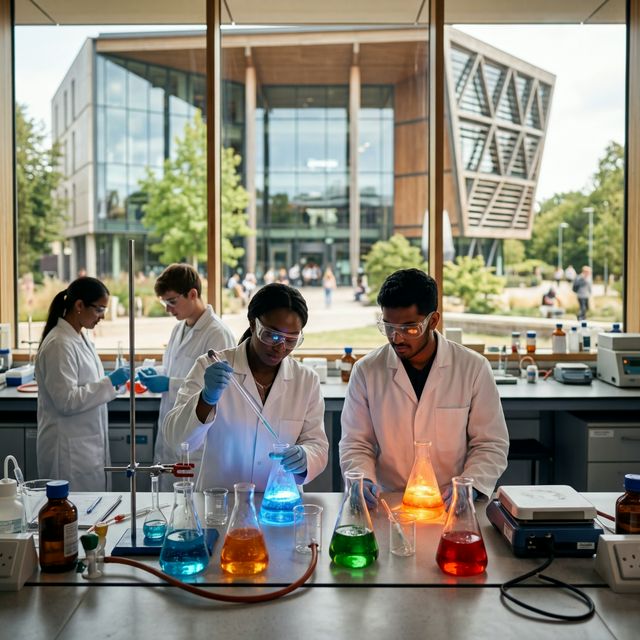
BSc Chemistry for Drug Discovery
About this course
Chemistry for drug discovery is a highly focused degree that trains chemists specifically for the pharmaceutical industry, one of the most technically demanding and economically significant sectors in which chemistry is applied. Drug discovery is the process of identifying and optimising new molecular compounds that could become medicines, moving from the initial identification of a biological target through the synthesis and testing of candidate molecules to the point at which a compound is ready to enter clinical trials. The chemistry involved requires mastery of organic synthesis, molecular modelling, biochemistry, and the analytical techniques used to characterise compounds and understand their behaviour in biological systems. At the University of Bath, this three-year programme builds a rigorous foundation in chemistry before focusing increasingly on the specific knowledge and skills relevant to drug discovery. You will study organic, inorganic, and physical chemistry alongside biochemistry, learning to understand how drug molecules interact with their biological targets at the molecular level, how they are metabolised by the body, and how their properties can be tuned through structural modification to improve their therapeutic potential. Laboratory work is central throughout, developing the synthetic and analytical skills that pharmaceutical research requires. Bath has strong connections to the pharmaceutical and biotechnology industries based in the South West, and the programme benefits from academic staff with research expertise in medicinal chemistry and chemical biology. Graduates are well positioned for careers in the pharmaceutical and biotechnology industries. Medicinal chemistry, process chemistry, analytical chemistry, and chemical biology are the most direct roles within drug discovery and development. Contract research organisations, which support pharmaceutical companies in carrying out chemical research, are a major employer of chemistry graduates with this specialism. Regulatory affairs, quality assurance, and intellectual property roles in the pharmaceutical sector are further possibilities. Some graduates continue to postgraduate research, developing specialisms in medicinal chemistry, chemical biology, or pharmacology that lead to research careers in academia or industry.
Syllabus & Modules
Typical curriculumStudent Satisfaction
National Student Survey - 65 respondents (83% response rate)
Similarly Ranked Alternatives

What comes next? 🎓
Choosing the right university starts with choosing the right school. Explore transparent, data-driven school profiles powered by official DfE statistics.
Explore Schools on WhatSchool.ai →