MChem Chemistry with Research in Industry
About this course
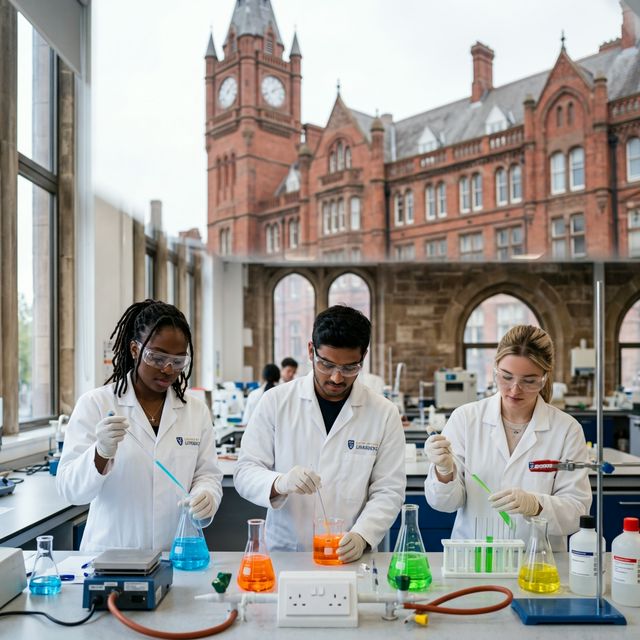
Chemistry is the science of matter at the molecular level, examining the properties of substances, the bonds that hold atoms together, and the reactions that transform one substance into another. It is a discipline of extraordinary breadth and consequence, underpinning the development of pharmaceuticals, materials, energy technologies, food science, and environmental monitoring. What makes chemistry distinctive as a degree subject is the combination of rigorous theoretical reasoning with precise experimental practice, training you to ask well-formed questions and to design and execute the experiments needed to answer them. At the University of Liverpool you will study this distinctive four-year full-time programme, Chemistry with Research in Industry, which is built around genuine research experience in an industrial or commercial laboratory. Across the programme you will study the major areas of chemistry including organic, inorganic, and physical chemistry, developing both the theoretical foundations and the practical laboratory skills that professional chemists require. The research in industry component is a defining feature of this degree, giving you the experience of working on real research problems in a professional setting rather than simply following prescribed procedures. This bridges the gap between academic learning and the way chemistry is actually practised in pharmaceutical companies, chemical manufacturers, materials firms, and other industrial research environments. The typical entry tariff is 152 points. Chemistry graduates with industrial research experience are highly valued across the pharmaceutical, chemical, materials, petrochemical, food and drink, and consumer products industries, as well as in environmental and analytical laboratories. Roles include research chemist, analytical chemist, formulation scientist, process chemist, regulatory affairs specialist, and technical sales. Further study is common, with many graduates pursuing PhD programmes in chemistry, materials science, or pharmacy, often building on contacts and experience gained during the industrial research element of their degree.
Syllabus & Modules
Typical curriculumStudent Satisfaction
National Student Survey - 15 respondents (71% response rate)
Similarly Ranked Alternatives


What comes next? 🎓
Choosing the right university starts with choosing the right school. Explore transparent, data-driven school profiles powered by official DfE statistics.
Explore Schools on WhatSchool.ai →