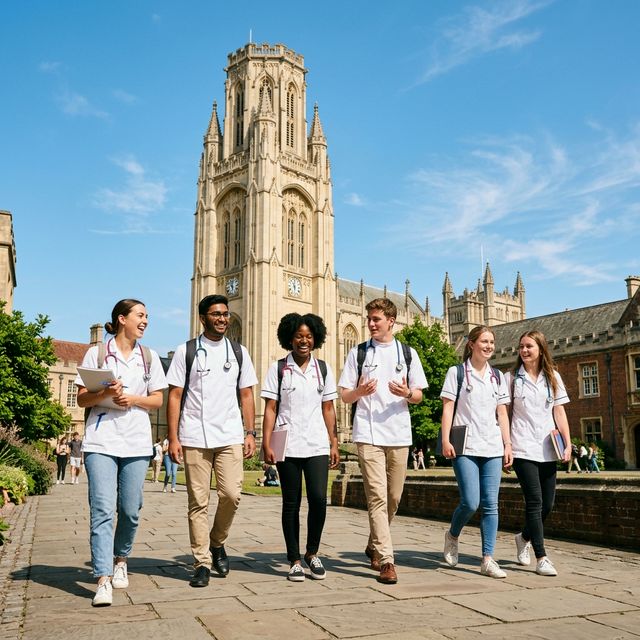
BSc Biomedical Sciences
About this course
Biomedical sciences investigates the biological and chemical foundations of human health and disease, developing the knowledge and practical skills that support both clinical diagnostic work and medical research. It is a discipline that spans multiple fields of biology, connecting them through the common thread of their relevance to understanding the human body in health and illness. At the University of Bristol this three-year, full-time programme begins with a deliberately broad first year, giving you a sound grounding across biochemistry, cell and cancer biology, genetics, immunology, microbiology, neuroscience, pharmacology, physiology, and virology. This breadth of foundational knowledge is a distinctive strength of the programme, ensuring that by the time you specialise in later years you have an integrated understanding of the biological systems that underlie human health. You will develop laboratory skills alongside your theoretical understanding, working with the techniques used in contemporary biomedical research and clinical science. Bristol is a leading research university, and the programme benefits from the research culture of one of the UK's most active biomedical science communities. Graduates of biomedical sciences go on to careers in NHS clinical laboratories, pharmaceutical and biotechnology companies, medical research institutes, public health agencies, and the life sciences industry. Many enter specialist roles in clinical biochemistry, haematology, microbiology, immunology, or histopathology. Others move into research and development, regulatory affairs, science communication, or health policy. The broad first year at Bristol is particularly valued because it gives graduates a more integrated scientific perspective than narrower programmes can provide. A significant number of graduates continue to postgraduate study, pursuing research degrees in specific biomedical disciplines or professional training in medicine, pharmacy, or allied health subjects.
Syllabus & Modules
Typical curriculumStudent Satisfaction
National Student Survey - 70 respondents (70% response rate)
Similarly Ranked Alternatives


What comes next? 🎓
Choosing the right university starts with choosing the right school. Explore transparent, data-driven school profiles powered by official DfE statistics.
Explore Schools on WhatSchool.ai →