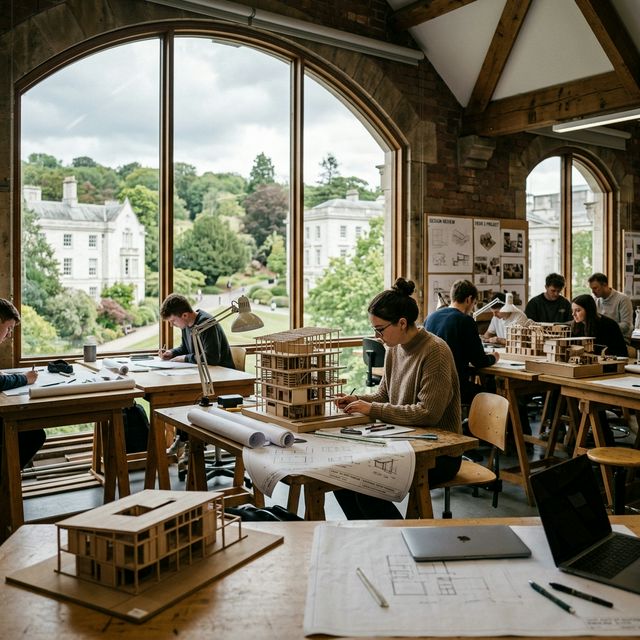
BEng Architectural Environment Engineering
About this course
Architectural environment engineering sits at the junction of building design and environmental physics, focusing on how buildings can be engineered to provide comfortable, healthy, and energy-efficient internal environments. The discipline is concerned with heating, ventilation, air conditioning, lighting, acoustics, and the energy systems that make modern buildings function, and with how these systems can be designed to minimise environmental impact while meeting the needs of the people who inhabit the spaces they serve. As the building sector confronts the urgent need to reduce carbon emissions, these skills are in growing demand. At Nottingham, a university with strong research credentials in sustainable buildings and low-energy design, this programme combines architectural understanding with environmental engineering principles. A foundation year is available for students who need additional preparation. You will study the physics of heat, light, and sound within buildings alongside the design and specification of environmental control systems, developing both theoretical understanding and the practical ability to model and optimise building performance. A year abroad is built into the programme, providing the opportunity to study in a different climate and building culture, which enriches your understanding of how environmental engineering solutions are shaped by context. Graduates are well placed for careers in building services engineering, sustainable design consultancy, facilities management, and the construction industry, where the combination of architectural sensitivity and engineering rigour is particularly valued. Many graduates pursue accreditation with the Chartered Institution of Building Services Engineers or related professional bodies. Further study at postgraduate level in sustainable buildings, low-energy architecture, or environmental engineering is also a natural route for those who want to specialise in the more research-intensive dimensions of the field.
Syllabus & Modules
Typical curriculumStudent Satisfaction
National Student Survey - 20 respondents (76% response rate)
Similarly Ranked Alternatives




What comes next? 🎓
Choosing the right university starts with choosing the right school. Explore transparent, data-driven school profiles powered by official DfE statistics.
Explore Schools on WhatSchool.ai →