
BSocSc Sociology
About this course
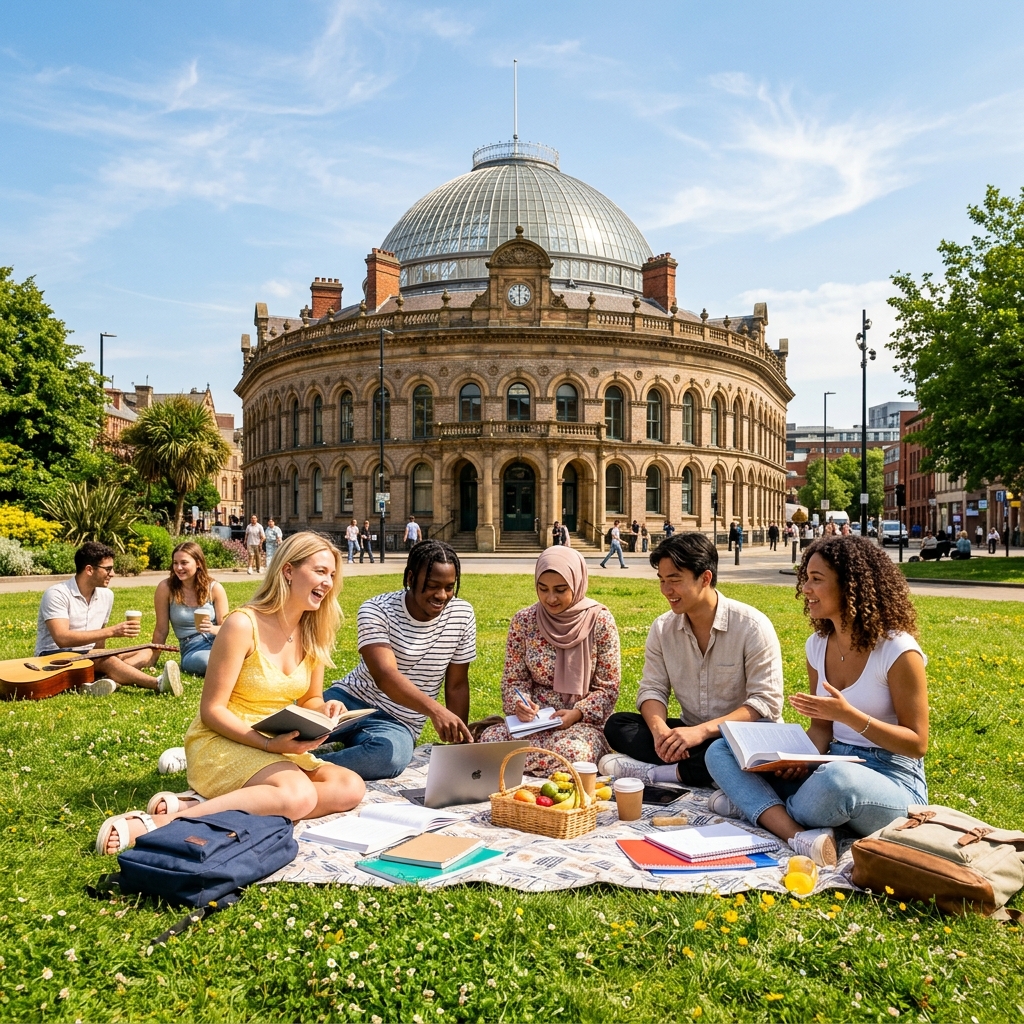
Sociology is the systematic study of human social life, from the intimate scale of families and friendship groups to the vast structures of global institutions and economic systems. It asks fundamental questions about why societies are organised the way they are, how inequalities of class, race, gender, disability, and sexuality are produced and sustained, how institutions shape individual lives, and how collective action can change the social world. Sociology does not take the existing order for granted but treats it as something requiring explanation, a perspective that makes it one of the most intellectually challenging and politically engaged disciplines in the social sciences. At the University of Manchester you will study this three-year full-time degree, with a typical entry tariff of 152 points. Manchester has a long and distinguished tradition in sociological research and its connections to ongoing debates about inequality, labour, urban life, and social change are felt throughout the programme. You will engage with the major theorists who shaped the discipline, from the classical founders through to contemporary thinkers, and you will develop the research skills needed to design and carry out your own empirical work, using both quantitative methods such as survey analysis and qualitative approaches such as interviewing and ethnography. The programme covers areas including health inequalities, migration, race and ethnicity, gender and sexuality, work and organisations, crime and deviance, and global social change. Sociology graduates work in a remarkably wide range of fields, because the analytical and research skills the degree develops are applicable almost everywhere. Common destinations include social research and policy analysis, the civil service, local government, public health, social work, community development, journalism, education, the charitable sector, and human resources. Many graduates also pursue postgraduate study in sociology, social policy, criminology, public health, or related disciplines, either to deepen their knowledge or to qualify for specialist professional roles.
Syllabus & Modules
Typical curriculumStudent Satisfaction
National Student Survey - 65 respondents (69% response rate)
Similarly Ranked Alternatives


What comes next? 🎓
Choosing the right university starts with choosing the right school. Explore transparent, data-driven school profiles powered by official DfE statistics.
Explore Schools on WhatSchool.ai →