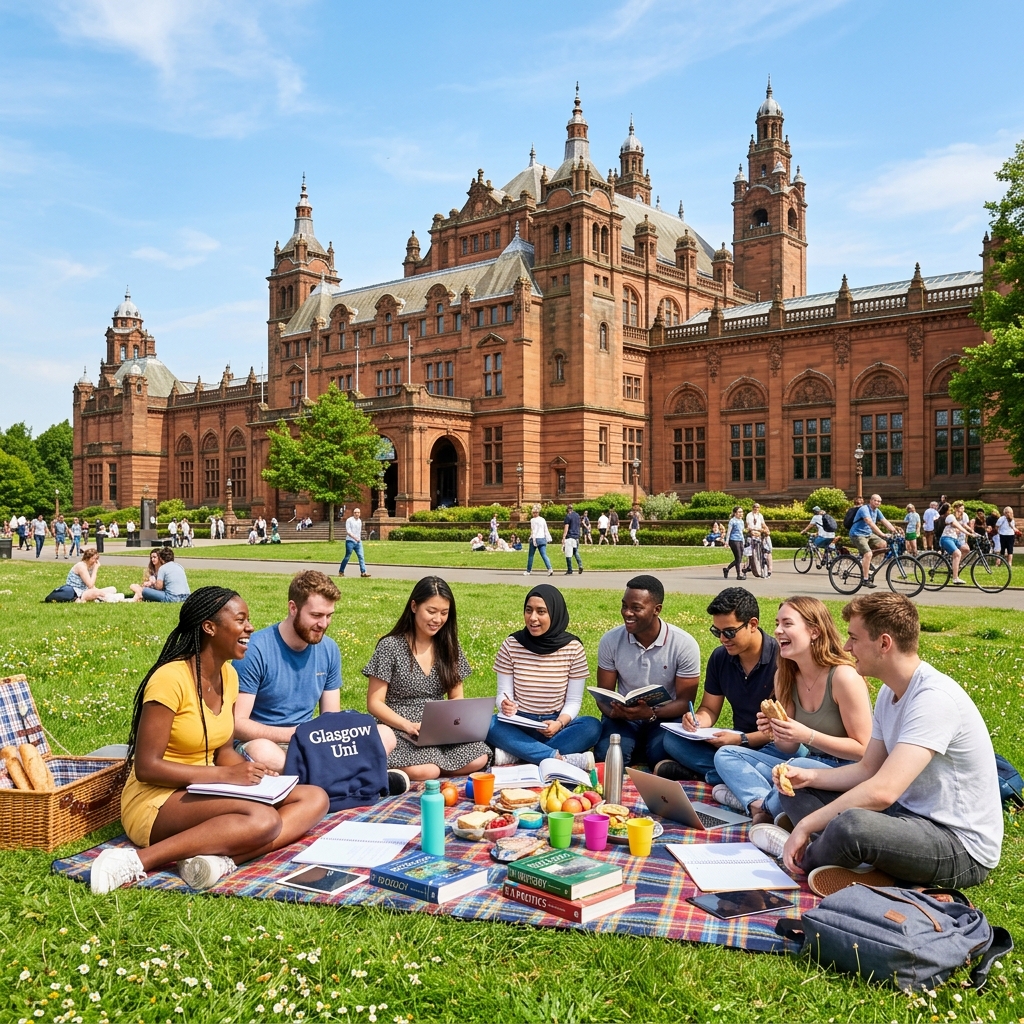
MA Scottish History/Scottish Literature
About this course
Scottish history and Scottish literature together offer an unusually rich and coherent field of study, exploring how one nation has understood and represented itself across centuries of political, social, and cultural change. Scotland's history encompasses the struggles of the medieval period, the turbulence of the Reformation and the Jacobite era, the dramatic social transformations of industrialisation, and the complex legacies of empire and emigration. Its literature, from the poetry of Robert Burns and the novels of Walter Scott to the contemporary voices of writers working in English, Scots, and Gaelic, has engaged imaginatively with that history while also shaping how Scotland has been perceived both at home and abroad. At the University of Glasgow, this four-year full-time degree allows you to pursue both disciplines at a university with deep scholarly commitments to each. Glasgow's Scottish history department includes researchers working across all periods from medieval to modern, and the Centre for Scottish and Celtic Studies creates an environment in which cross-disciplinary engagement is genuinely encouraged. In Scottish literature, you will read widely across the tradition, developing sensitivity to how genre, language choice, and historical circumstance shape what writers can say and how they say it. The combination rewards students who enjoy asking how historical events are transformed into stories, and how literature in turn shapes historical memory and national identity. A year abroad is built into the programme, offering the opportunity to bring an external perspective back to questions about Scottish distinctiveness. The typical entry tariff is 200 UCAS points. Graduates pursue careers in heritage, museums and archives, education, journalism, cultural policy, publishing, broadcasting, and the arts. The analytical and writing skills developed across both disciplines are also valued in the civil service, law, and public administration. Many graduates continue to postgraduate study in Scottish literature, history, or related fields, and Glasgow's research culture provides a strong foundation for those who wish to pursue scholarship.
Syllabus & Modules
Typical curriculumStudent Satisfaction
National Student Survey - 185 respondents (73% response rate)
Similarly Ranked Alternatives
What comes next? 🎓
Choosing the right university starts with choosing the right school. Explore transparent, data-driven school profiles powered by official DfE statistics.
Explore Schools on WhatSchool.ai →