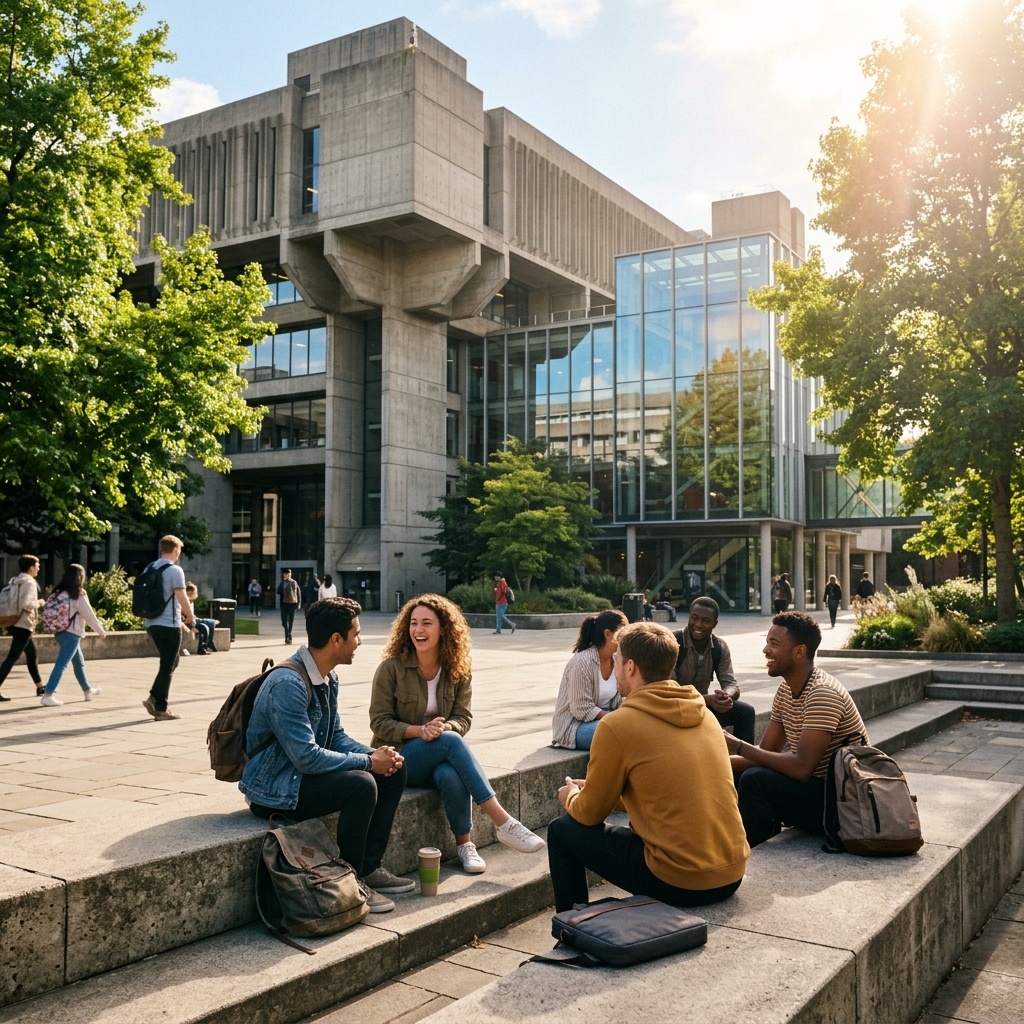
BA Philosophy and Sociology (Including Foundation Year and Year Abroad)
About this course
Philosophy and sociology are disciplines that approach the human world from complementary angles. Philosophy analyses the broad conceptual questions underlying human life: what exists, how we can know anything, what makes actions right or wrong, how we should understand justice, law, and aesthetic experience. Sociology examines how social life is actually organised and experienced, asking why individuals, groups, cultures, and societies are structured as they are, and how those structures produce inequalities, identities, and possibilities for change. The combination enables you to move between the abstract and the empirical, bringing conceptual rigour to social questions and grounding philosophical reflection in real social conditions. At the University of Essex, this five-year, full-time programme includes a foundation year and a year abroad within its structure, providing both a supported entry point and an international dimension that enriches both disciplines. The philosophy component develops your skills in logical reasoning, ethical analysis, and the critical examination of arguments about reality, knowledge, and value. The sociology component equips you with theoretical frameworks and empirical methods for understanding how the social world works, examining the tensions, interactions, and networks that make up everyday life. The combination develops the kind of multi-layered thinking that is increasingly valued in complex professional environments. The typical entry tariff is 120 UCAS points. Graduates from philosophy and sociology programmes are well prepared for a wide range of careers. The civil service, policy research, journalism, education, the law, social work and social care, NGOs, arts and cultural administration, and the tech sector are all fields where the analytical and reflective skills this combination develops are valued. Many graduates pursue postgraduate study in philosophy, sociology, social policy, or related fields, and some go on to research degrees in the social sciences or humanities.
Syllabus & Modules
Typical curriculumStudent Satisfaction
National Student Survey - 20 respondents (68% response rate)
Similarly Ranked Alternatives


What comes next? 🎓
Choosing the right university starts with choosing the right school. Explore transparent, data-driven school profiles powered by official DfE statistics.
Explore Schools on WhatSchool.ai →