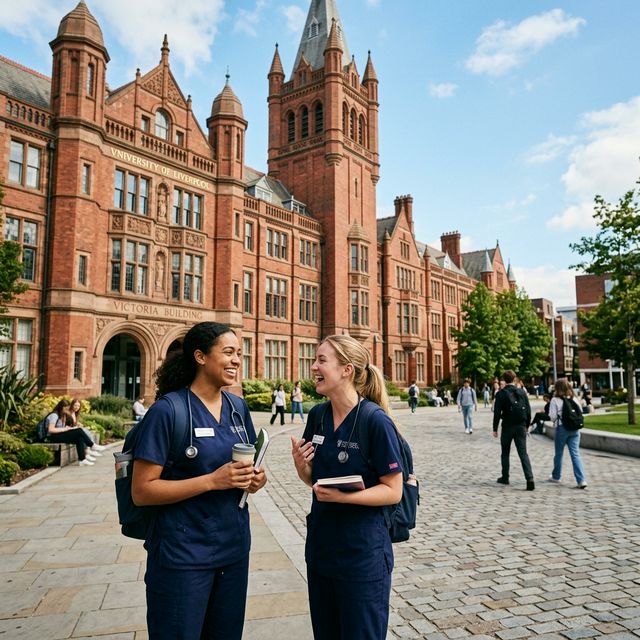
BSc Orthoptics
About this course
Orthoptics is an allied health profession concerned with the assessment and non-surgical management of disorders of binocular vision, eye movement, and the visual system in general. Orthoptists work primarily with people who have strabismus, commonly known as squint, amblyopia, commonly known as lazy eye, and disorders affecting the ocular muscles and nerves that control eye movement. They work with patients from infancy through to old age, carrying out detailed assessments of visual function and applying treatments including exercises, patching, optical devices, and prisms to improve visual alignment and function. Orthoptists also screen for eye conditions in children and contribute to ophthalmology teams in assessing patients with neurological conditions. At the University of Liverpool you will study this three-year full-time degree, which includes a year abroad, giving you the opportunity to experience orthoptic practice and education in a different national context, broadening your clinical perspective. Liverpool is one of the few universities in the UK to offer an orthoptics programme, reflecting the specialist nature of the profession, and the programme leads to eligibility for registration with the Health and Care Professions Council. Across the programme you will study ocular anatomy and physiology, optics and refraction, the development of the visual system in children, the assessment and management of strabismus and amblyopia, neuro-ophthalmology, paediatric eye conditions, and low vision rehabilitation. Clinical placements in NHS ophthalmology departments are central to the training. The typical entry tariff is 120 points. Qualified orthoptists work in NHS ophthalmology departments, in paediatric eye clinics, in community screening services, and increasingly in independent practice. The profession is small and the demand for orthoptists consistently exceeds the number trained, making employment prospects very strong. Further study and specialist practice development in areas such as paediatric ophthalmology, neuro-ophthalmology, or glaucoma monitoring are available to qualified orthoptists.
Syllabus & Modules
Typical curriculumStudent Satisfaction
National Student Survey - 25 respondents (86% response rate)
What comes next? 🎓
Choosing the right university starts with choosing the right school. Explore transparent, data-driven school profiles powered by official DfE statistics.
Explore Schools on WhatSchool.ai →