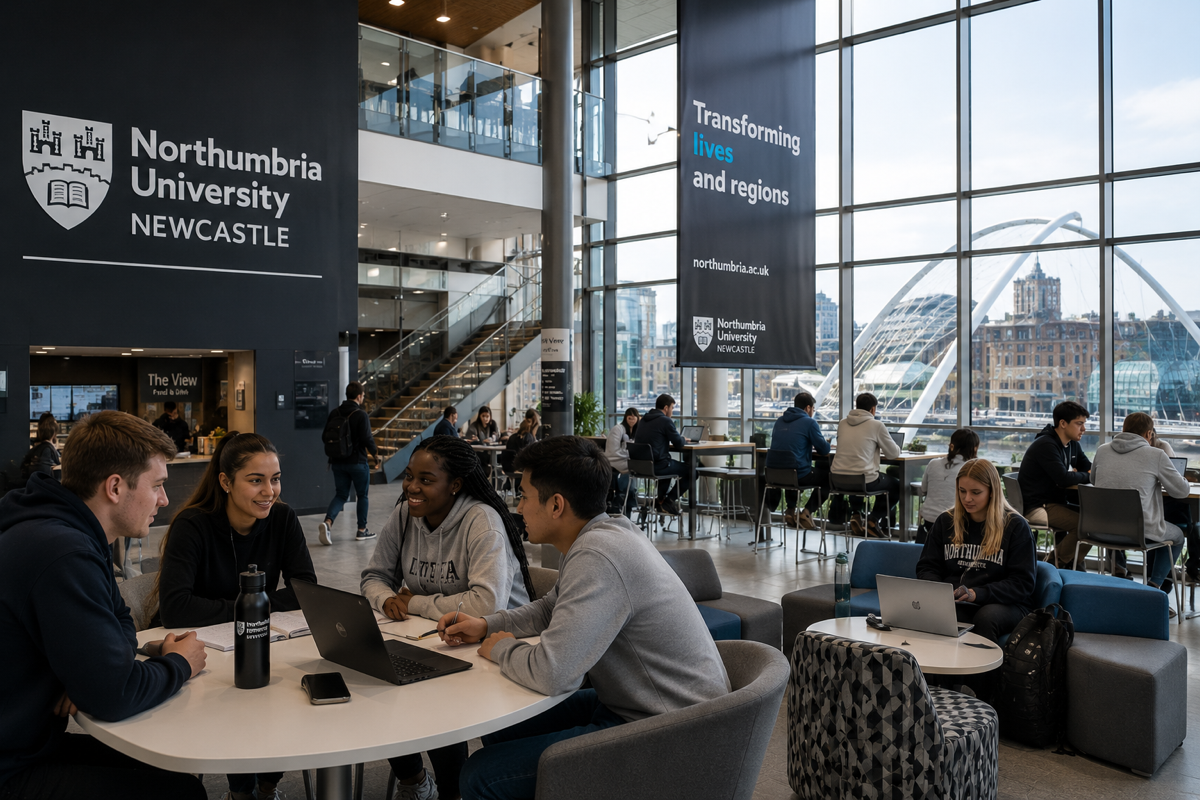
BSc Occupational Therapy
About this course
Occupational therapy is a health and social care profession built on the insight that being able to engage in meaningful occupation is fundamental to human wellbeing. Occupational therapists work with people of all ages who experience difficulties in participation, whether due to physical illness or injury, mental health conditions, learning disabilities, developmental challenges, or the effects of ageing. The profession approaches each person by examining the relationship between their capacities, their environment, and the occupations they want or need to carry out, and by modifying any of these elements to enable greater participation and independence. At Northumbria University in Newcastle, this three-year full-time programme is explicitly practice-based, with over 1,000 hours of placement integrated into the degree. These placements are the core of occupational therapy training, taking you into real clinical, community, and social care settings where you develop patient assessment skills, treatment planning abilities, and intervention skills under the supervision of qualified practitioners. In addition to placements, you will learn through managed role play and simulation, which develops clinical reasoning and professional confidence before you enter placement environments. You will study the theoretical foundations of occupational therapy, human anatomy and physiology, mental health, neurological rehabilitation, developmental theory, and occupational science. You will develop the therapeutic relationship and communication skills that the profession demands alongside clinical competence. Reflective practice is central to occupational therapy, and you will develop the habit of critically evaluating your own performance throughout the degree. Graduates are eligible to register with the Health and Care Professions Council. Career settings include NHS hospitals, community health teams, mental health services, social care, schools, and the independent sector. With experience, occupational therapists advance into specialist, management, education, and research roles.
Syllabus & Modules
Typical curriculumStudent Satisfaction
National Student Survey - 40 respondents (87% response rate)
Similarly Ranked Alternatives



What comes next? 🎓
Choosing the right university starts with choosing the right school. Explore transparent, data-driven school profiles powered by official DfE statistics.
Explore Schools on WhatSchool.ai →