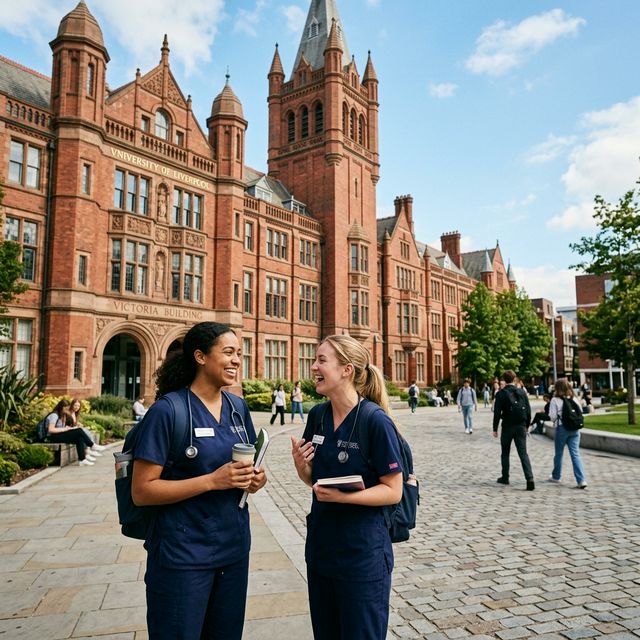
BSc Occupational Therapy
About this course
Occupational therapy is a health profession concerned with enabling people to participate in the activities that are meaningful to them, whether those are self-care tasks, work, education, or leisure, when illness, disability, injury, or the effects of ageing have made participation difficult. It is a discipline grounded in the belief that engagement in purposeful activity is central to health and wellbeing, and occupational therapists work across a wide range of settings, from hospitals and community health services to schools, prisons, and mental health teams. The University of Liverpool's three-year full-time Occupational Therapy programme prepares you for registration and professional practice. You will study the theoretical foundations of occupational science, understanding how occupation shapes human health and development, alongside the clinical knowledge needed to assess and address the specific needs of individuals across the lifespan. The curriculum covers physical rehabilitation, mental health, paediatrics, neurological conditions, and the social and environmental factors that affect a person's ability to participate. You will learn assessment techniques, activity analysis, therapeutic interventions, and the skills of professional reasoning needed to work effectively with complex cases. The programme includes a year abroad, giving you the opportunity to study or undertake clinical experience in an international setting, which broadens your understanding of how occupational therapy is practised in different health systems and cultural contexts. Practice placements are central to your development throughout the programme, and you will accumulate clinical hours in a range of settings that prepare you for the demands of independent professional practice on graduation. Graduates are eligible to apply for registration with the Health and Care Professions Council and to work as qualified occupational therapists within the NHS, social care, independent practice, and the voluntary sector. Career progression routes include specialist practice, management, research, education, and leadership roles within health and care organisations.
Syllabus & Modules
Typical curriculumStudent Satisfaction
National Student Survey - 40 respondents (89% response rate)
Similarly Ranked Alternatives



What comes next? 🎓
Choosing the right university starts with choosing the right school. Explore transparent, data-driven school profiles powered by official DfE statistics.
Explore Schools on WhatSchool.ai →