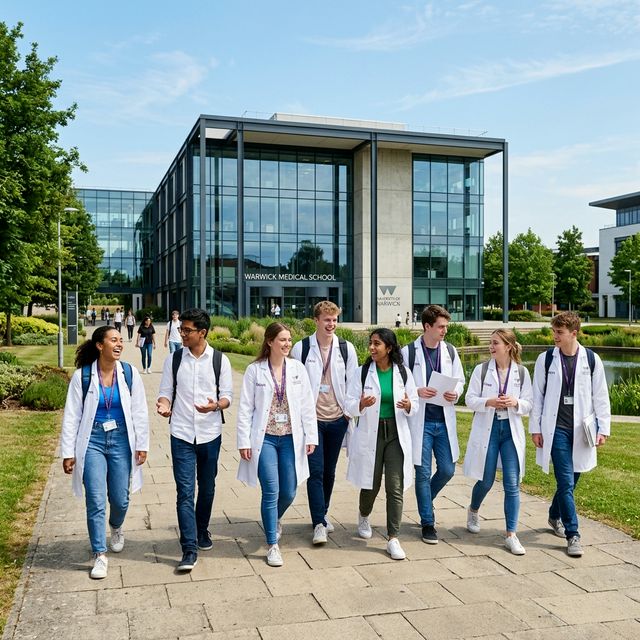
BSc Neuroscience
About this course
Neuroscience is the scientific study of the brain and nervous system, the most complex biological structure we know of. It asks how neural circuits generate behaviour, how the brain processes information, how conscious experience arises from physical processes, and what happens when the nervous system goes wrong in conditions such as Alzheimer's disease, Parkinson's disease, depression, epilepsy, and addiction. Neuroscience sits at the intersection of biology, chemistry, physics, and psychology, drawing on all of them to address questions that matter both scientifically and medically. At the University of Warwick, this three-year, full-time degree is the most specialised offering of the School of Life Sciences, designed for students with a strong specific interest in how the brain and central nervous system works. You will study the cellular and molecular basis of neural function, the organisation of neural systems, the neuroscience of perception, learning, and memory, and the neurological and psychiatric conditions that result from dysfunction in these systems. The programme develops both laboratory skills and the capacity for quantitative analysis, preparing you for a field in which experimental rigour and data literacy are equally important. The typical entry tariff of 152 points reflects the scientific demanding of a specialised programme at a research-led university. Neuroscience graduates move into a range of careers. Many go on to postgraduate study or doctoral research, contributing to the scientific understanding of the brain at a time when the field is advancing rapidly. Others move into the pharmaceutical and biotechnology industries, working on the development of treatments for neurological and psychiatric conditions. Clinical careers in medicine, clinical psychology, physiotherapy, and speech and language therapy are accessible with further professional training. Science communication, policy, and education are also common destinations for graduates who want to apply their scientific understanding in a broader public context.
Syllabus & Modules
Typical curriculumStudent Satisfaction
National Student Survey - 20 respondents (83% response rate)
Similarly Ranked Alternatives

What comes next? 🎓
Choosing the right university starts with choosing the right school. Explore transparent, data-driven school profiles powered by official DfE statistics.
Explore Schools on WhatSchool.ai →