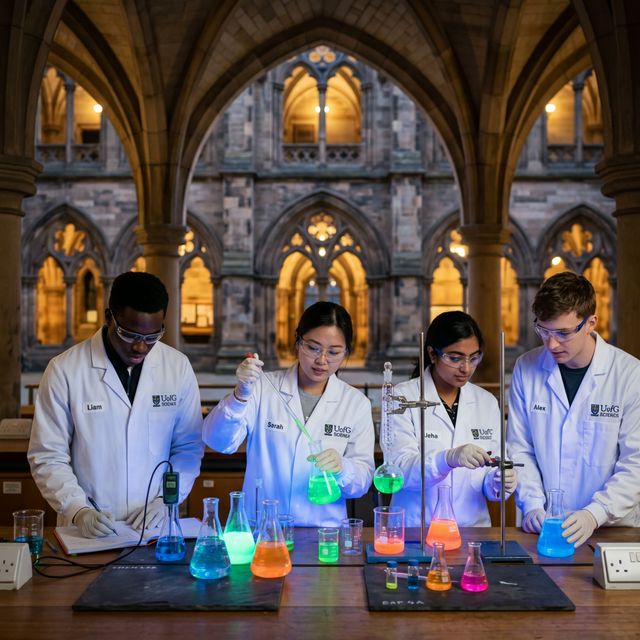
BSc Molecular & Cellular Biology with Plant Science
About this course
Molecular and cellular biology with plant science sits at the intersection of fundamental life science and one of the most urgent applied challenges of our time. Molecular and cellular biology examines the mechanisms that underlie all living processes, from how genes are expressed and regulated to how cells communicate, divide and differentiate. Plant science extends that biological knowledge specifically to the plant kingdom, asking how plants grow, respond to environmental stress, manage water and nutrients, harvest light and defend themselves against pathogens. Understanding plants at the molecular and cellular level is central to developing more productive, resilient and sustainable crops in the face of climate change and global food security challenges. At the University of Glasgow, this four-year full-time programme includes a year abroad, giving you an international dimension to your scientific education. You will develop a rigorous grounding in the molecular and cellular biology that underpins all life, including biochemistry, genetics and cell biology, alongside specialist plant science content covering plant physiology, photobiology, growth regulation, root and stomatal biology and the responses of plants to their environment. The Glasgow research group addresses a wide range of plant science questions, and you will engage with cutting-edge research that connects directly to real-world agricultural and environmental challenges. With a typical entry tariff of 200 UCAS points, this is a demanding and intellectually stimulating programme. Graduates from molecular and cellular biology with plant science programmes pursue careers in crop science, agricultural biotechnology, plant breeding, food science, environmental science, conservation, pharmaceutical plant research and academic research. Many go on to postgraduate study at masters or doctoral level in plant biology, molecular biology, agricultural science, biotechnology or environmental science. The combination of fundamental molecular training and applied plant science knowledge is increasingly valuable as the scientific community works to address the productivity and sustainability challenges facing global agriculture.
Syllabus & Modules
Typical curriculumStudent Satisfaction
National Student Survey - 230 respondents (71% response rate)
Similarly Ranked Alternatives


What comes next? 🎓
Choosing the right university starts with choosing the right school. Explore transparent, data-driven school profiles powered by official DfE statistics.
Explore Schools on WhatSchool.ai →