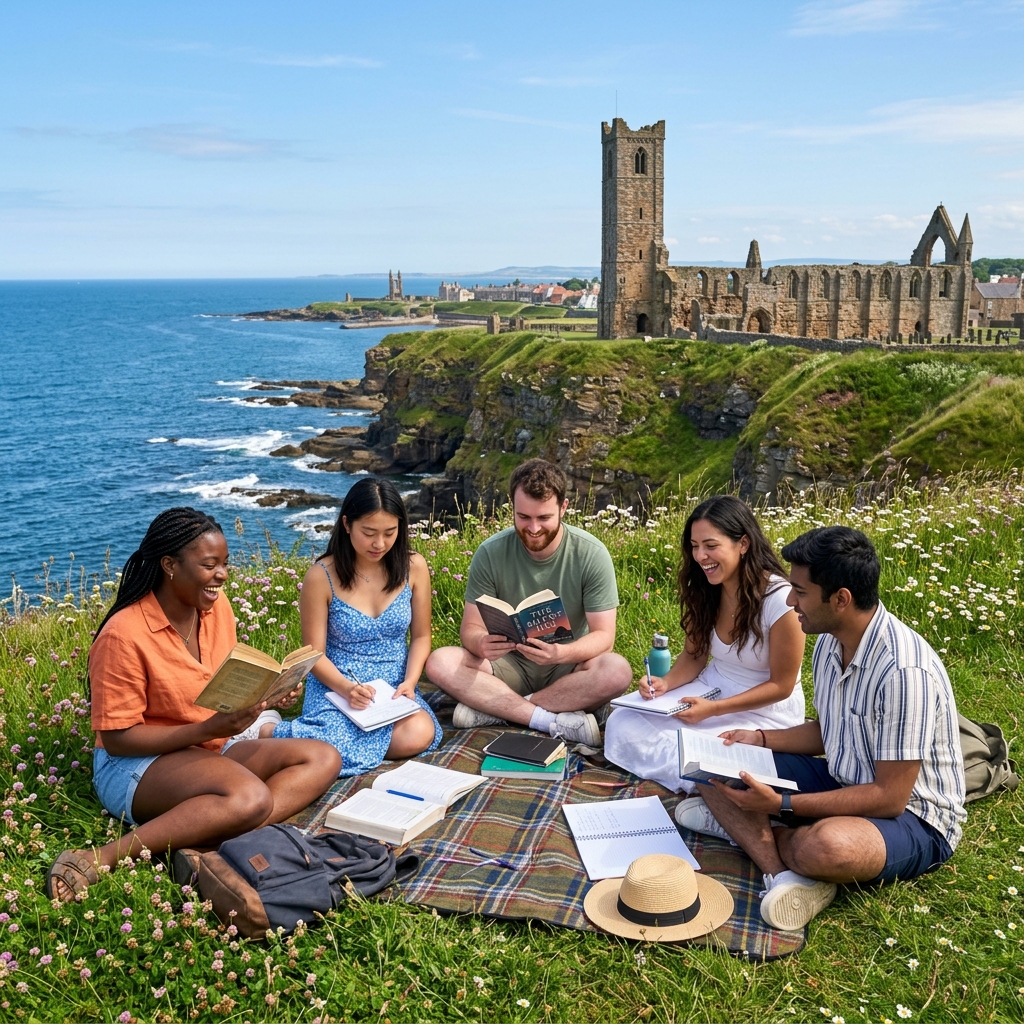
MA Modern Languages (Italian and Spanish) and Ancient History
About this course
Studying two modern languages alongside ancient history places you at a productive crossing point between the living and the distant past. Italian and Spanish are among the most widely spoken languages in the world, carriers of literary, artistic, philosophical and political traditions that have shaped European and global culture for centuries. Ancient history brings a different but equally demanding set of skills, immersing you in the civilisations of Greece, Rome and the wider Mediterranean world from the archaic period through to late antiquity, asking how those societies organised themselves, told their stories and left traces for later generations to interpret. At St Andrews you will develop your Italian and Spanish to a high level of linguistic proficiency, moving from grammar and translation through to advanced reading, writing and spoken fluency. You will engage with literature, film, history, politics and culture in both languages, developing an ear for register, style and the ways in which language carries meaning across contexts. The ancient history component introduces you to the methods of the historian, working with primary sources including inscriptions, coins, papyri and literary texts alongside the secondary scholarship. This four-year programme includes a year abroad, which gives you the opportunity to live and study in a country whose language you are learning, transforming your fluency and cultural understanding in ways that cannot be replicated in a classroom. The combination of two foreign languages and an analytical discipline like ancient history equips you for careers requiring cultural intelligence, research skill and precise communication. Graduates move into diplomacy and the foreign office, international business and trade, law, journalism, publishing, heritage and cultural management, education, translation and interpreting, and the civil service. Postgraduate study in history, languages, classics or area studies is a natural continuation for those drawn to research or academic careers.
Syllabus & Modules
Typical curriculumStudent Satisfaction
National Student Survey - 15 respondents (62% response rate)
Similarly Ranked Alternatives


What comes next? 🎓
Choosing the right university starts with choosing the right school. Explore transparent, data-driven school profiles powered by official DfE statistics.
Explore Schools on WhatSchool.ai →