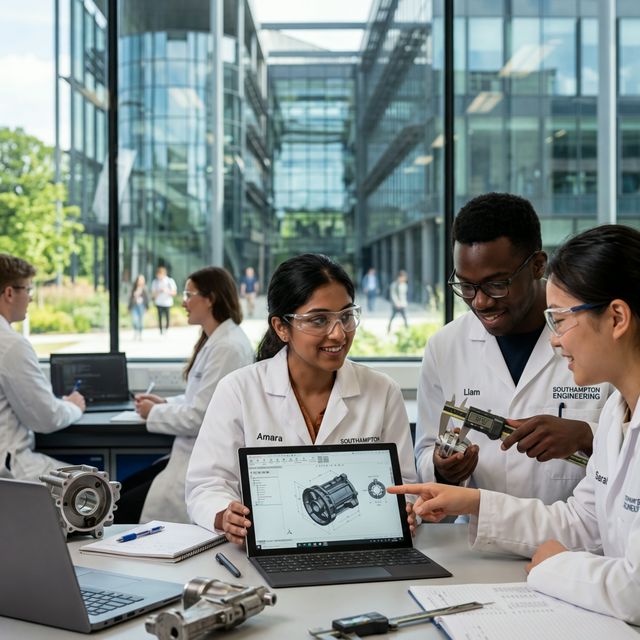
MEng Mechanical Engineering/Sustainable Energy Systems
About this course
Mechanical Engineering with Sustainable Energy Systems is a degree that trains you in the fundamental science and engineering of machines and energy while equipping you to address one of the defining challenges of our time: how to supply the energy that modern societies need without destroying the environment that sustains them. Mechanical engineering provides the analytical and design foundations, covering thermodynamics, fluid mechanics, materials science, dynamics, and the engineering of systems that convert, store, and distribute energy. The sustainable energy systems specialism applies this grounding to wind turbines, solar technologies, batteries, and the infrastructure of a low-carbon energy future. At the University of Southampton, this four-year, full-time programme includes a sandwich year and work placement opportunities. You will study the core subjects of mechanical engineering while exploring how engineering skills can be focused on cutting-edge energy technologies, including the challenges of energy storage, grid integration, and efficient conversion. Southampton's engineering faculty is a research leader in sustainable energy, and the teaching reflects active engagement with the problems the energy transition presents. The sandwich year places you in a professional engineering environment, building the practical experience that makes academic knowledge applicable and employers value. Graduates of Mechanical Engineering with Sustainable Energy Systems work in renewable energy design and development, energy consultancy, power systems engineering, environmental engineering, and the research and development functions of energy companies. The global drive towards net zero creates sustained demand for engineers with exactly this profile, and the mechanical engineering foundation also opens roles in aerospace, manufacturing, automotive, and defence for those who wish to keep their options broad. Many graduates pursue chartered engineering status and some continue to postgraduate study in energy systems, thermodynamics, or environmental engineering.
Syllabus & Modules
Typical curriculumStudent Satisfaction
National Student Survey - 110 respondents (79% response rate)
Similarly Ranked Alternatives

What comes next? 🎓
Choosing the right university starts with choosing the right school. Explore transparent, data-driven school profiles powered by official DfE statistics.
Explore Schools on WhatSchool.ai →