High Drop-out Rate Alert
20% of students drop out or transfer from this specific course. Consider asking why on an open day.
BSc Mathematics and Economics
About this course
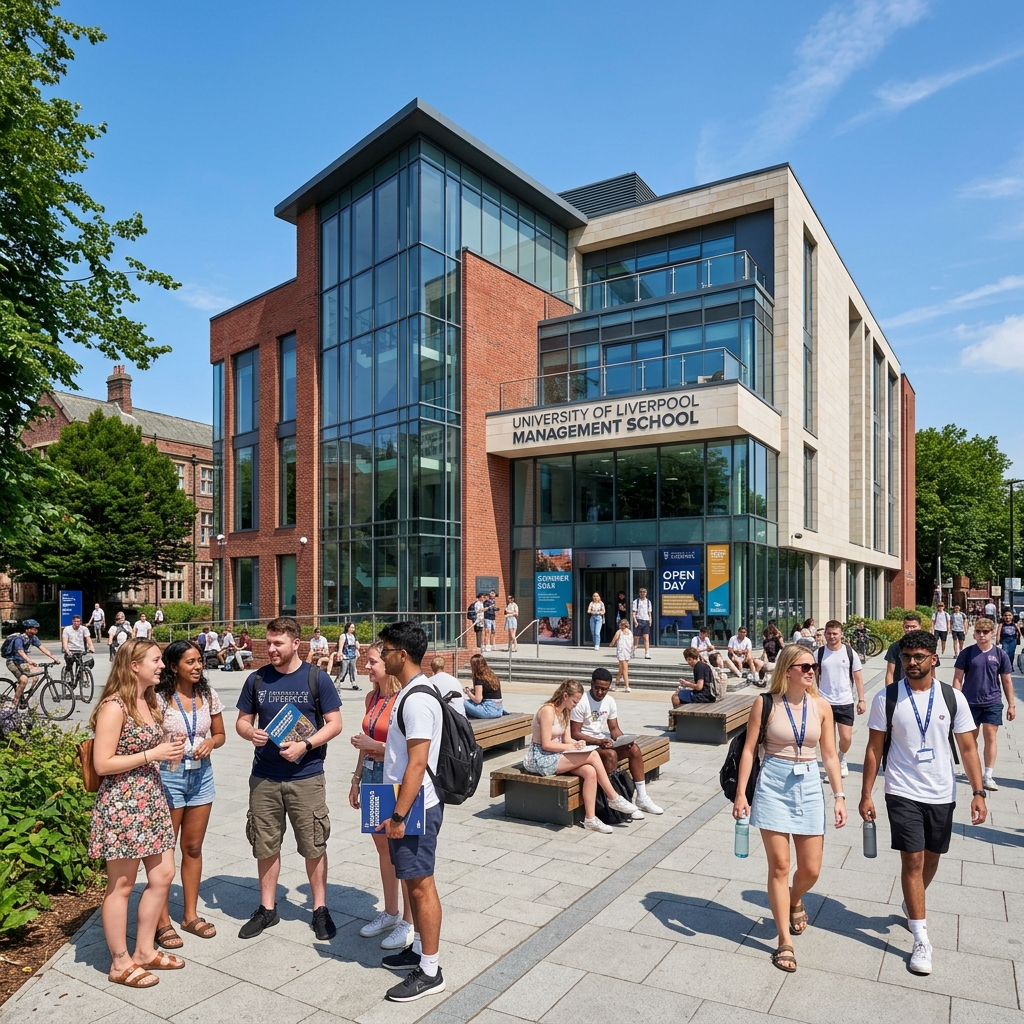
Mathematics and economics is a combination that produces graduates with an unusually powerful analytical toolkit. Economics is the study of how individuals, organisations, and societies make choices under conditions of scarcity, and its modern form is deeply mathematical. The most rigorous economic analysis, whether of labour markets, financial systems, game theory, or macroeconomic policy, requires precisely the mathematical skills that this degree develops in parallel with the economics. The result is a graduate who can engage with economic questions at a level of depth and precision that a traditional economics degree alone does not always develop. At the University of Liverpool, this three-year full-time programme includes a year abroad, which adds an international dimension to a degree that is already globally relevant. Economics is a discipline where the comparison of different national systems, policies, and outcomes is central to how understanding develops, and studying in another country sharpens your analytical perspective on these comparisons. You will study real and linear analysis, statistics, econometrics, probability, and mathematical methods alongside microeconomics, macroeconomics, international economics, finance, and economic policy. The interplay between the two disciplines is continuous: mathematical tools illuminate economic theory, and economic questions give mathematical methods a purpose and context. The quantitative skills you develop are among the most valued by employers across a wide range of sectors. The ability to model, analyse data rigorously, and communicate findings clearly in both technical and non-technical registers marks you out as a graduate with genuine analytical depth. Graduates in mathematics and economics work in finance, banking, investment management, economic consulting, the civil service, data science, actuarial practice, and academic research. The year abroad adds an international record that strengthens your position in competitive graduate recruitment. Further study at masters level in economics, financial mathematics, or data science is a common route for those who want to specialise, and doctoral study is accessible to the strongest graduates for those wishing to pursue academic careers.
Syllabus & Modules
Typical curriculumStudent Satisfaction
National Student Survey - 10 respondents (73% response rate)
Similarly Ranked Alternatives


What comes next? 🎓
Choosing the right university starts with choosing the right school. Explore transparent, data-driven school profiles powered by official DfE statistics.
Explore Schools on WhatSchool.ai →