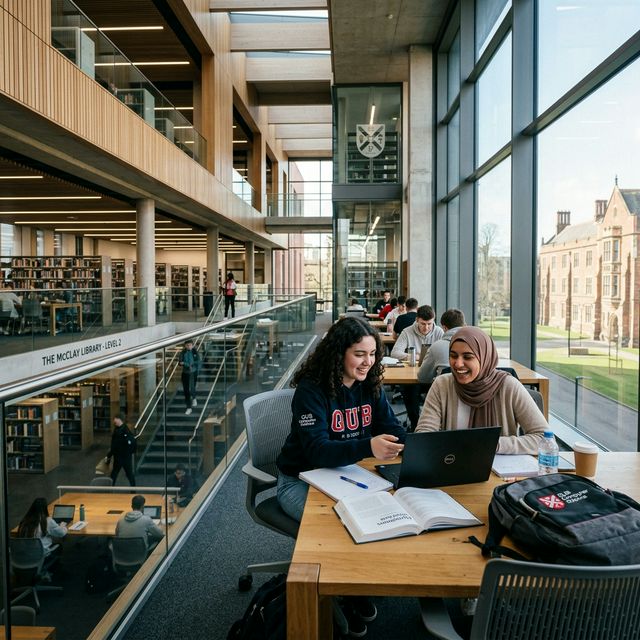
MSci Mathematics and Computer Science (Undergraduate Masters)
About this course
Mathematics and computer science share deep intellectual roots. Many of the foundational ideas of modern computing, from the theory of computation and the logic of algorithms to the mathematics of cryptography and network theory, were developed by mathematicians. The two disciplines continue to inform each other constantly, and graduates who are fluent in both are among the most versatile and sought-after in the technology labour market. This four-year undergraduate masters programme at Queen's University of Belfast, delivered jointly with the School of Electronics, Electrical Engineering and Computer Science, is designed to develop that dual competence to a high level. You will study mathematics and computer science in combination throughout the programme, developing rigorous analytical and problem-solving skills alongside practical expertise in programming, algorithms, software engineering and the theory of computation. The mathematical content covers areas including analysis, algebra, probability and statistics, giving you the formal tools to reason precisely about computational problems. The computer science component builds your practical ability to design and implement systems, and the programme develops your understanding of the connections between the two disciplines at every stage. The undergraduate masters level means you go beyond the coverage of a standard BSc, developing research skills and engagement with advanced material that prepares you well for postgraduate study. Graduates of this programme are in high demand across the technology, finance and research sectors. Software engineering, data science, algorithm development, cryptography, financial modelling, artificial intelligence and academic research are all well-established career directions. The depth of mathematical training the programme provides distinguishes its graduates in roles where formal reasoning and the ability to develop novel solutions to computational problems are essential. Many graduates proceed to doctoral research in mathematics, computer science or interdisciplinary fields at the boundary of the two.
Syllabus & Modules
Typical curriculumStudent Satisfaction
National Student Survey - 70 respondents (75% response rate)
Similarly Ranked Alternatives
What comes next? 🎓
Choosing the right university starts with choosing the right school. Explore transparent, data-driven school profiles powered by official DfE statistics.
Explore Schools on WhatSchool.ai →