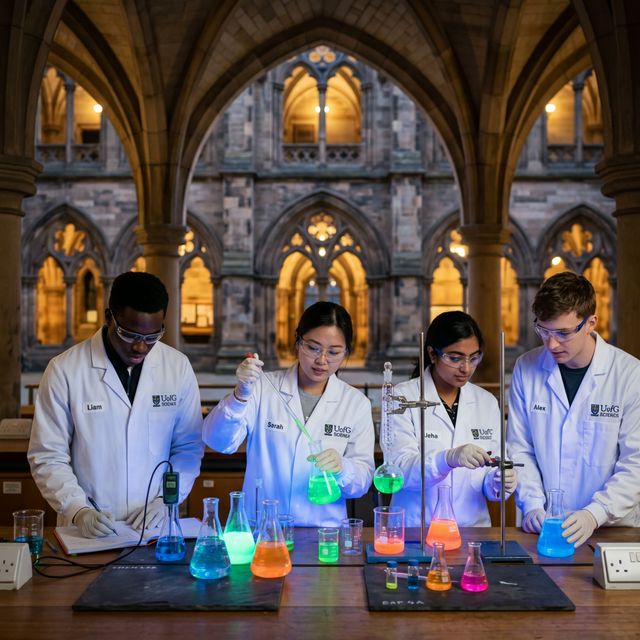
MSci Materials Chemistry with European Placement
About this course
Materials chemistry is a branch of chemistry focused on the relationship between the structure of materials at the molecular and atomic scale and their properties and performance in real applications. It asks how fundamental knowledge of chemical bonding, reactivity, and molecular architecture can be translated into practical innovations in areas such as nanotechnology, electronics, polymers, energy storage, and functional coatings. As the world looks for new solutions to energy efficiency, data storage, and sustainable manufacturing, materials chemists are increasingly central to the research and development effort. At the University of Glasgow, this five-year full-time programme includes a European placement, which is a distinctive and genuinely valuable feature of the degree. The placement gives you the opportunity to spend a period working or studying at a European partner institution or company, gaining first-hand experience of how materials chemistry is practised in a different national and industrial context and developing the professional relationships and international perspective that strengthen your profile on graduation. The academic content of the programme covers the core of chemistry, including organic, inorganic, and physical chemistry, alongside specialist materials topics such as polymer science, nanomaterials, surface chemistry, and the characterisation techniques used to study materials at the atomic scale. A typical tariff of 200 points reflects the academic rigour of the programme at one of the UK's leading chemistry departments, which has an internationally recognised research reputation in materials and synthetic chemistry. Graduates of materials chemistry programmes work in semiconductor and electronics companies, pharmaceutical and materials manufacturing, energy technology, defence, and environmental science. Research is a common destination, with many graduates continuing to doctoral study in materials chemistry, nanoscience, or polymer chemistry. The European placement strengthens graduate employability and opens doors in international companies and research institutes across the continent.
Syllabus & Modules
Typical curriculumStudent Satisfaction
National Student Survey - 35 respondents (76% response rate)
Similarly Ranked Alternatives


What comes next? 🎓
Choosing the right university starts with choosing the right school. Explore transparent, data-driven school profiles powered by official DfE statistics.
Explore Schools on WhatSchool.ai →