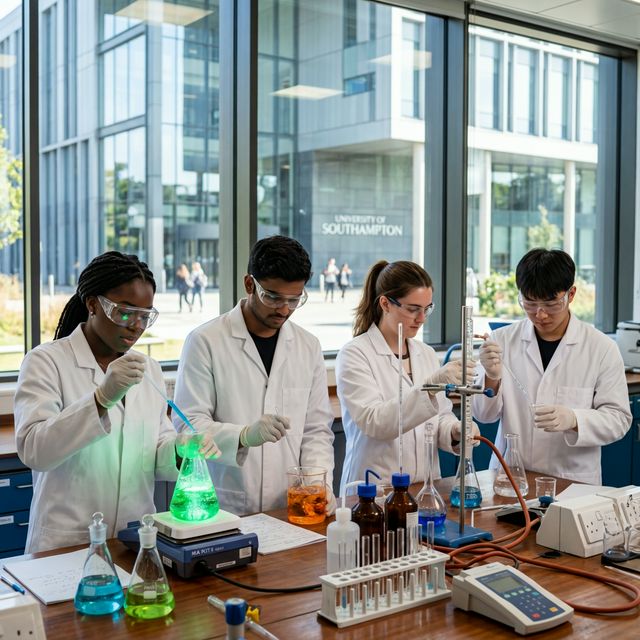
BSc Marine Biology with Oceanography
About this course
Marine biology with oceanography sits at the intersection of two disciplines that are inseparable in practice: understanding marine organisms fully requires understanding the physical and chemical environments they inhabit, and those environments are made comprehensible, in large part, by the presence of the living things that inhabit and shape them. Marine biology examines the diversity, physiology, behaviour, and ecology of organisms from bacteria and phytoplankton to whales and deep-sea invertebrates. Physical and chemical oceanography asks how water moves, how heat and salt are distributed, how carbon and nutrients cycle through the ocean, and how those processes are changing in response to human activity. At Southampton, one of the UK's leading centres for oceanographic research and home to the National Oceanography Centre, this three-year full-time programme gives you a strong foundation in the biology of the marine environment and its relationship to physical and chemical oceanography. You will learn how marine plants and animals interact with their environment and respond to change, developing the biological and environmental knowledge needed to understand ocean systems at multiple scales. Theory is integrated with field trips and laboratory work, giving you hands-on experience in data collection, species identification, and experimental methods alongside your conceptual learning. Graduates of marine biology with oceanography programmes find careers in environmental consultancy, government environmental agencies, fisheries management, marine protected area management, ecological survey work, aquaculture, and research institutions. The combination of biological training and oceanographic knowledge is valued in organisations monitoring the health of marine ecosystems and advising on marine policy and conservation. Many graduates continue to postgraduate study in marine biology, oceanography, or environmental science, contributing to the research that underpins marine conservation and climate science.
Syllabus & Modules
Typical curriculumStudent Satisfaction
National Student Survey - 10 respondents (58% response rate)
Similarly Ranked Alternatives

What comes next? 🎓
Choosing the right university starts with choosing the right school. Explore transparent, data-driven school profiles powered by official DfE statistics.
Explore Schools on WhatSchool.ai →