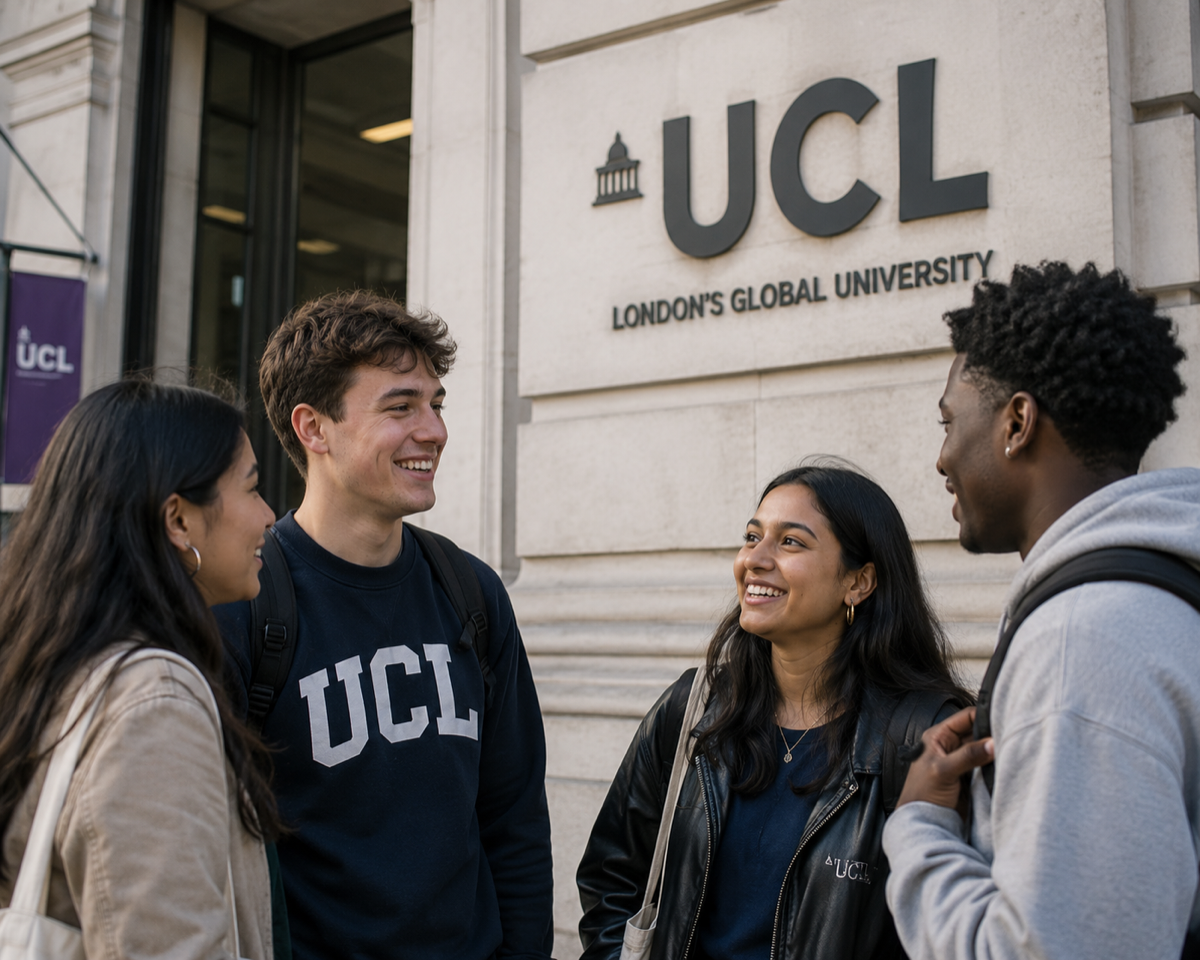
BA Italian and Portuguese
About this course
Italian and Portuguese is a combination that opens access to two of the world's most culturally rich and geographically far-reaching languages. Italian is the language of one of Europe's great artistic and intellectual traditions, and of a country whose contributions to literature, music, philosophy, design, and cuisine have shaped cultures far beyond its borders. Portuguese is a global language spoken by well over 200 million people across Portugal, Brazil, Angola, Mozambique, and other communities worldwide, making it one of the most significant languages for anyone interested in international affairs, commerce, or culture in the southern Atlantic world. Studying both together gives you a remarkable linguistic and cultural range. At University College London, this four-year joint honours programme divides your study equally between the two languages. You will develop proficiency in speaking, listening, reading, writing, and translation in both Italian and Portuguese, while also engaging with cultural content including literature, film, history, linguistics, and politics. The breadth of modules available allows you to shape your degree around your particular interests, whether your focus is on Renaissance Italy, contemporary Brazilian culture, or the political histories of Portuguese-speaking nations. The third year is spent abroad, divided between countries where your two languages are spoken, giving you the immersion experience that is essential to reaching an advanced level of competence. Graduates of Italian and Portuguese programmes pursue careers in international business, diplomacy, translation and interpretation, journalism, education, cultural organisations, and the civil service. The combination of deep cultural knowledge and high-level language skills is valued wherever organisations operate across Italian or Portuguese-speaking markets, and that covers an exceptionally wide range of sectors and geographies. Many graduates continue to postgraduate study in languages, translation, literature, or cultural studies, building academic or specialist professional careers. The analytical and communicative skills developed through a modern languages degree are genuinely transferable across any field.
Syllabus & Modules
Typical curriculumStudent Satisfaction
National Student Survey - 15 respondents (70% response rate)
Similarly Ranked Alternatives



What comes next? 🎓
Choosing the right university starts with choosing the right school. Explore transparent, data-driven school profiles powered by official DfE statistics.
Explore Schools on WhatSchool.ai →