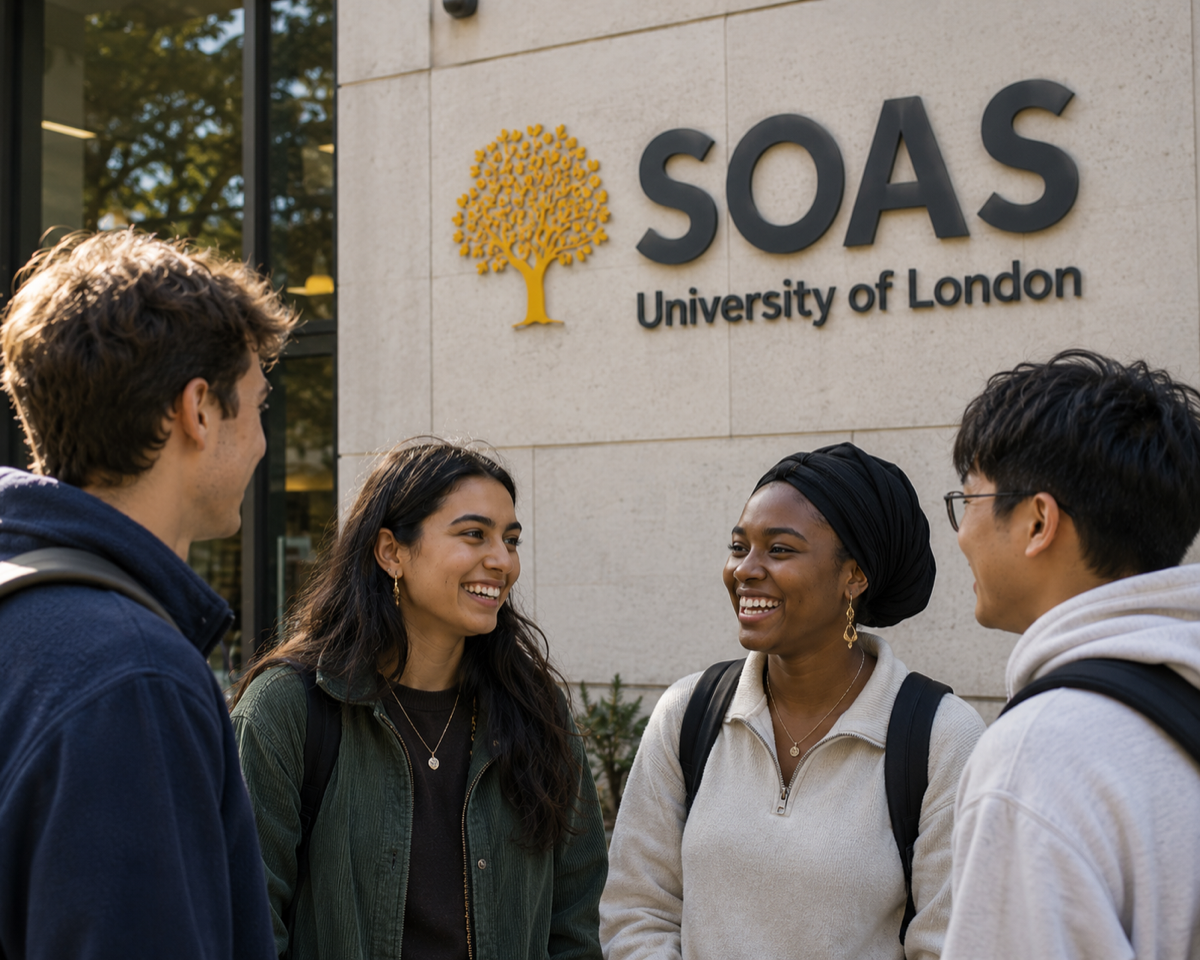
BA International Relations and Korean
About this course
International relations and Korean is a degree for those who want to understand the politics of the contemporary world and engage directly with one of its most significant and rapidly evolving regions. International relations provides the analytical framework for understanding how states, international institutions, and non-state actors interact, how power is exercised and contested, and what drives conflict and cooperation in the global system. Korean gives you direct linguistic and cultural access to a nation that has undergone one of the most remarkable economic transformations in history, that is at the centre of one of the world's most dangerous security situations, and whose cultural influence has become genuinely global. At SOAS, this four-year full-time programme combines the political and international analytical training of IR with rigorous Korean language study and engagement with Korean culture, history, and society. The programme includes a foundation year, providing a structured academic preparation for students who benefit from additional support before degree-level study. You will study the major theories of international relations alongside Korean from beginner level, developing analytical and linguistic competencies in tandem. Entry requirements for joint degrees are based on the subject with the higher requirements, with the range being AAB to ABB. Graduates of international relations and Korean programmes pursue careers in diplomacy, the foreign and civil service, South Korean companies operating internationally, journalism, international development, NGOs, and think tanks. Korean-language proficiency combined with IR expertise is particularly valued in organisations with interests in the Korean peninsula and Northeast Asia. Many graduates also go on to postgraduate study in international relations, Korean studies, or East Asian security, where the linguistic and analytical preparation of this degree provides an excellent foundation.
Syllabus & Modules
Typical curriculumStudent Satisfaction
National Student Survey - 15 respondents (82% response rate)
Similarly Ranked Alternatives

What comes next? 🎓
Choosing the right university starts with choosing the right school. Explore transparent, data-driven school profiles powered by official DfE statistics.
Explore Schools on WhatSchool.ai →