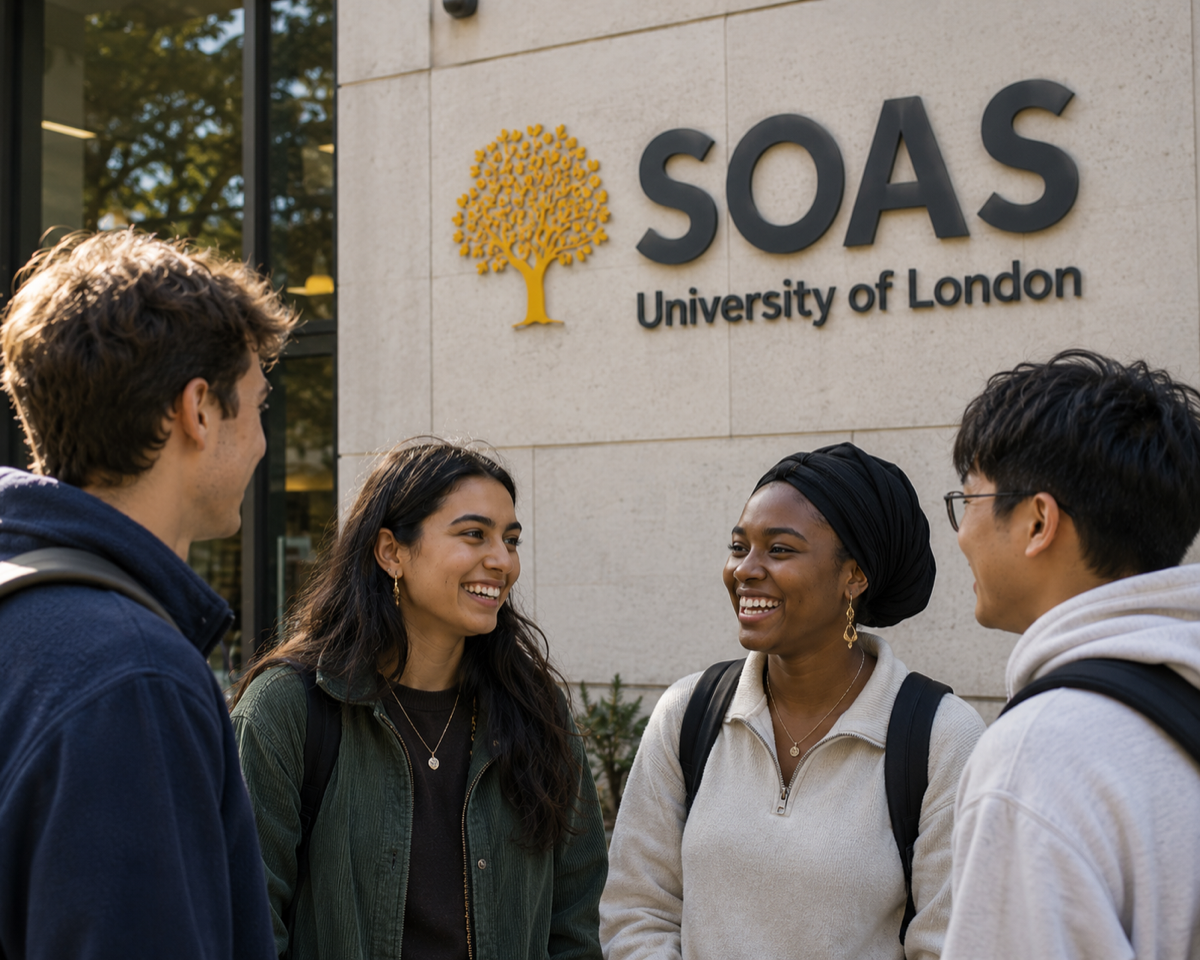
BA History of Art and Global Development
About this course
History of art and global development is a combination that brings together the study of visual culture with one of the most urgent fields in contemporary scholarship, the analysis of economic development, inequality, and the relationship between the global North and South. History of art trains you to look carefully at images, objects, and spaces, to situate them within the cultural and historical contexts that produced them, and to analyse what they reveal about the societies and minds that made them. Global development examines the political economy of poverty, inequality, aid, trade, and the international frameworks through which development is attempted and contested. At the School of Oriental and African Studies, which has unique expertise in the cultures of Asia, Africa, and the Middle East, you will study this combination with access to a scholarly community specialising in the art, history, and development of regions that are often marginalised in Western art historical accounts. The foundation year is available for those who need additional preparation. Across the programme you will develop the visual analytical skills of art history alongside the social scientific and policy knowledge of development studies, producing a genuinely distinctive intellectual profile. Graduates of this combination are well placed for careers in international development organisations, NGOs, heritage and museums, cultural diplomacy, journalism, the civil service, and any role that requires understanding the relationship between culture, inequality, and global change. The combination is particularly valuable for careers at the intersection of culture and development, such as cultural heritage in post-conflict settings, community arts and development, or arts policy in international contexts. Many graduates continue to postgraduate study in art history, development studies, cultural heritage, or postcolonial studies.
Syllabus & Modules
Typical curriculumStudent Satisfaction
National Student Survey - 40 respondents (68% response rate)
Similarly Ranked Alternatives

What comes next? 🎓
Choosing the right university starts with choosing the right school. Explore transparent, data-driven school profiles powered by official DfE statistics.
Explore Schools on WhatSchool.ai →