High Drop-out Rate Alert
35% of students drop out or transfer from this specific course. Consider asking why on an open day.
BSc Game Development with Integrated Foundation Year
About this course
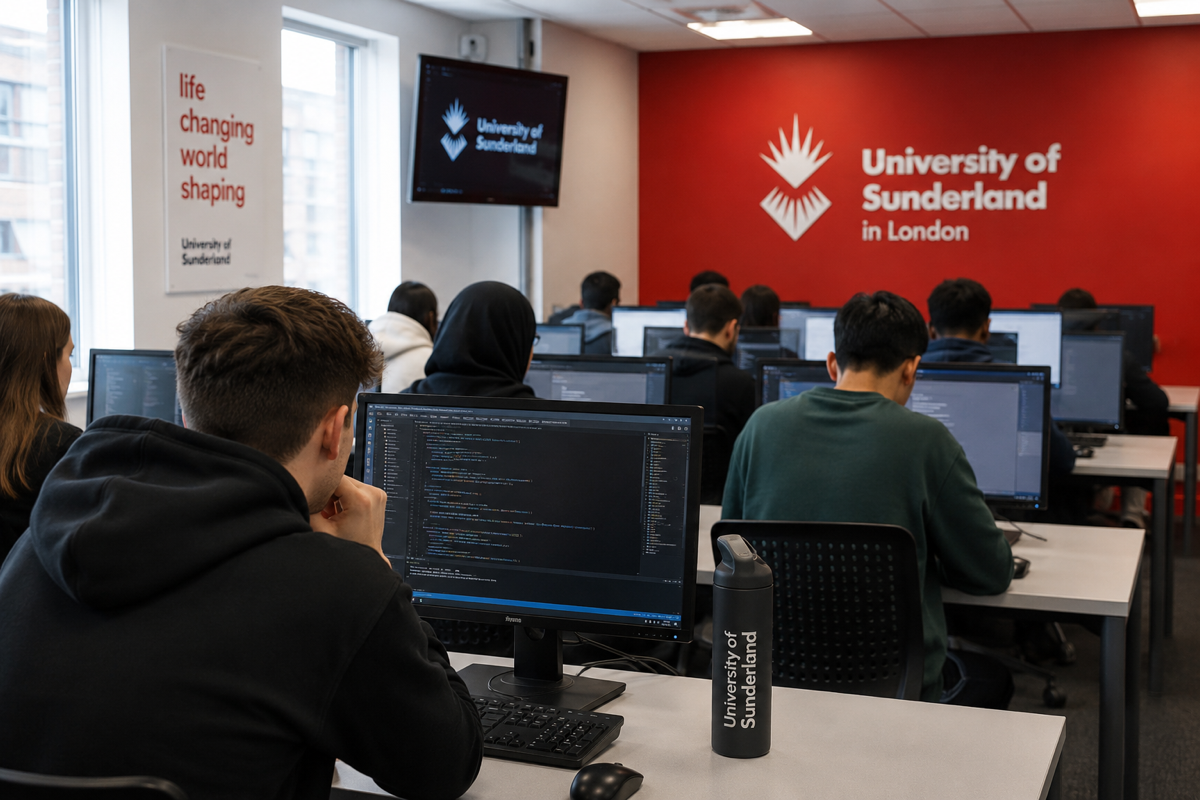
Game development is the interdisciplinary practice of designing and building interactive digital experiences, combining programming, visual design, sound, narrative, and systems thinking to create games and interactive media. It is one of the creative industries' most technically demanding disciplines, requiring proficiency in software development alongside an understanding of what makes interactive experiences engaging, functional, and well-designed. The global games industry is large, economically significant, and continuing to grow, and it depends on developers who can work across the technical and creative dimensions of game production. At Sunderland, this four-year degree includes an integrated foundation year, providing a supported entry into higher education that builds the foundational skills and knowledge you will need before progressing to degree-level study. This makes the programme accessible to students who are returning to education, who did not meet direct entry requirements, or who want additional preparation before beginning the main degree. Across the programme you will develop programming skills, learn to work with game engines and tools used in the industry, study game design theory, and develop practical experience through project work that reflects the kinds of tasks you will encounter professionally. The degree includes a sandwich year in industry and work placement opportunities, giving you the direct professional experience that games employers actively seek in graduates. Game development graduates move into roles as programmers, game designers, level designers, technical artists, and quality assurance testers in the games industry, as well as in interactive media, simulation, and virtual reality sectors. The technical skills developed are also applicable in software development, visual effects, and interactive design more broadly. Many graduates build their professional portfolio during the degree through personal and collaborative projects, which is an important part of establishing a career in a creative industry where demonstrable work matters as much as formal qualifications. Postgraduate study in games design, computer science, or interactive media is available for those wishing to develop specialist expertise.
Syllabus & Modules
Typical curriculumStudent Satisfaction
National Student Survey - 15 respondents (81% response rate)
Similarly Ranked Alternatives


What comes next? 🎓
Choosing the right university starts with choosing the right school. Explore transparent, data-driven school profiles powered by official DfE statistics.
Explore Schools on WhatSchool.ai →