BA French and Portuguese
About this course
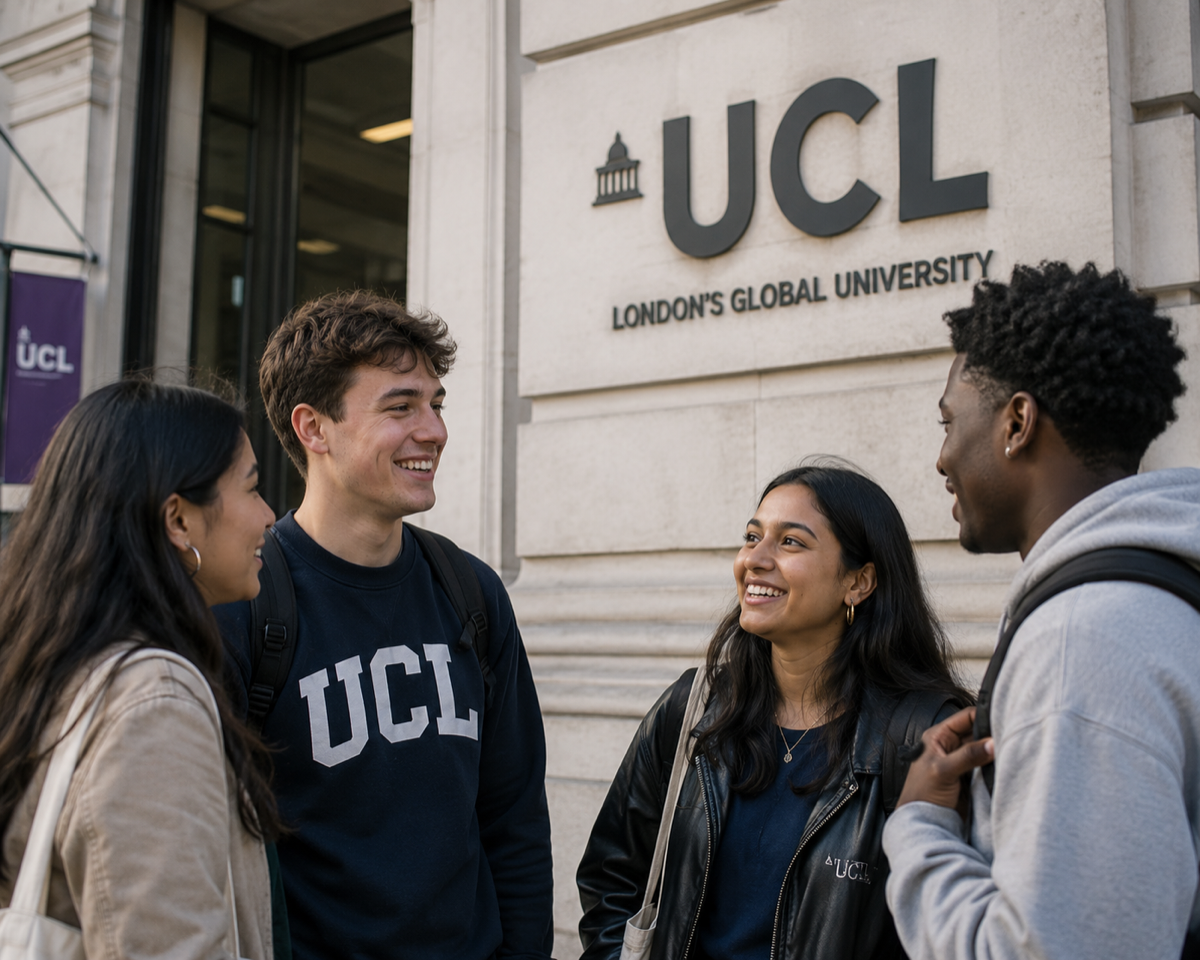
French and Portuguese is a combination that connects two of the world's most geographically extensive language families. French is spoken by around 320 million people across Europe, Africa, North America, the Caribbean, and the Pacific, and is an official language of international institutions including the United Nations and the European Union. Portuguese has a similarly global reach, spoken by around 250 million people in Brazil, Portugal, Mozambique, Angola, Cape Verde, and beyond, making it the most widely spoken language in the Southern Hemisphere after Spanish. Studying both at degree level gives you access to enormous cultural and literary traditions alongside the practical linguistic capability to work across a wide range of countries and contexts. At University College London, this four-year programme allows you to develop advanced proficiency in both French and Portuguese, reading literature in the original languages, engaging with the histories and cultures of the Francophone and Lusophone worlds, and developing the linguistic precision and cultural knowledge that mark a genuinely competent linguist. You will study a range of literary texts, cultural materials, and linguistic questions, and the programme encourages comparative thinking about how the two language communities have shaped and been shaped by their global reach. UCL's strong language faculty provides an excellent environment for studying both Romance languages at the highest level. Graduates with French and Portuguese move into careers in translation and interpreting, international business and trade, the diplomatic service, journalism, cultural organisations, and international development. The combination is particularly valuable for work in Africa, where both French and Portuguese are major languages of government and commerce, and in international organisations with a global mandate. Teaching modern languages at secondary level is another important career path. Many graduates pursue postgraduate study in linguistics, literature, or area studies, or undertake further professional language qualifications.
Syllabus & Modules
Typical curriculumStudent Satisfaction
National Student Survey - 25 respondents (64% response rate)
Similarly Ranked Alternatives


What comes next? 🎓
Choosing the right university starts with choosing the right school. Explore transparent, data-driven school profiles powered by official DfE statistics.
Explore Schools on WhatSchool.ai →