BSc Forensic Chemistry with Science Foundation Year
About this course
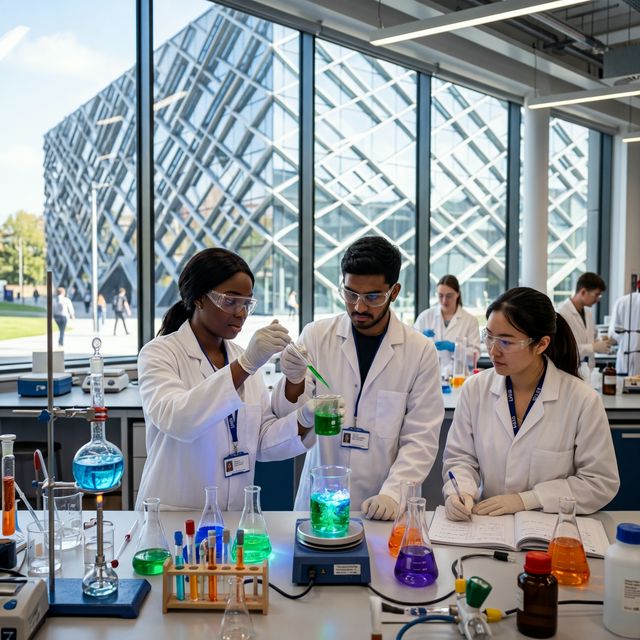
Forensic chemistry applies the methods and principles of chemistry to questions that arise within the justice system, from the analysis of substances found at crime scenes to the examination of fire debris, toxicology, and trace evidence. It is a discipline that demands both rigorous laboratory technique and an understanding of how scientific evidence is presented and tested in legal and investigative contexts. Forensic chemists need to be precise, methodical, and able to communicate complex findings clearly, and they work at the interface of science and law. At Lincoln you will study the foundations of analytical and organic chemistry alongside the forensic applications that make this degree distinctive. The programme is offered with a science foundation year, which provides a thorough preparation in the scientific principles and laboratory skills you will need before entering the main degree. This is designed for students who are motivated and academically capable but whose prior science qualifications need to be broadened or reinforced before degree-level chemistry begins. From the first year of the main degree onwards you will build expertise in analytical techniques, toxicology, drug analysis, fire investigation, trace evidence examination, and the scientific methods used in forensic investigation. You will develop practical skills in Lincoln's chemistry laboratories in a research-active academic environment. Graduates go on to careers in forensic science services, police laboratories, toxicology, environmental analysis, pharmaceutical quality control, and regulatory agencies. The combination of chemistry skills and forensic understanding is also valued in roles in healthcare science, teaching, and research. Those who wish to extend their knowledge can progress to postgraduate study in forensic science, analytical chemistry, or toxicology.
Syllabus & Modules
Typical curriculumStudent Satisfaction
National Student Survey - 45 respondents (81% response rate)
Similarly Ranked Alternatives



What comes next? 🎓
Choosing the right university starts with choosing the right school. Explore transparent, data-driven school profiles powered by official DfE statistics.
Explore Schools on WhatSchool.ai →