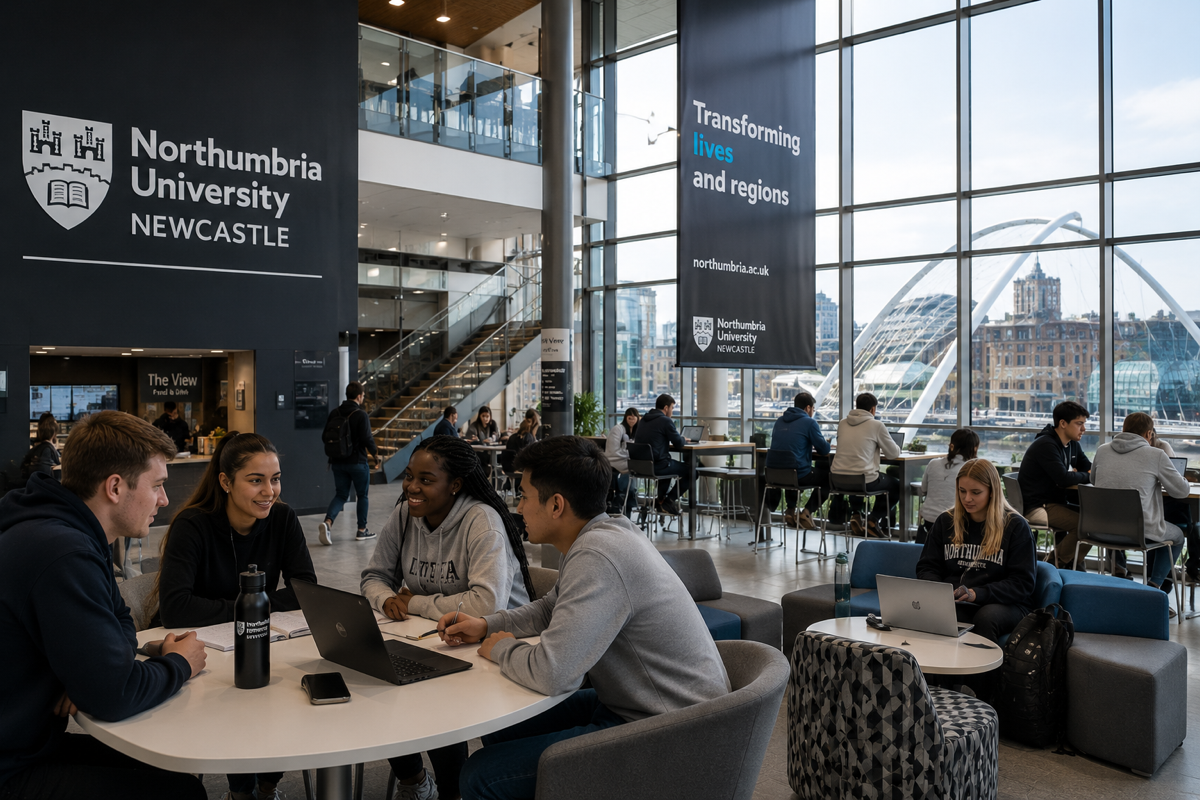
BA Fine Art
About this course
Fine Art is among the most demanding and self-directed disciplines in higher education. It asks you to develop a personal creative practice, to engage seriously with the history and theory of art, and to hold both together in conversation with your own making. Unlike design or craft disciplines that are shaped by external briefs, Fine Art places the source of inquiry with you: you determine what questions are worth asking and what forms and materials are the right means to explore them. This requires a particular kind of intellectual courage and a willingness to work through uncertainty without reaching too quickly for resolved outcomes. At the University of Northumbria at Newcastle, this three-year full-time programme is structured to support that development at every stage. You will work in studios and workshops, experimenting with a wide range of media and processes, from painting and sculpture to photography, moving image, installation, and performance. Alongside your practical work you will engage with critical and theoretical writing about art, developing the ability to situate your practice within broader cultural and historical contexts. The programme includes a sandwich year and a year abroad, giving you the opportunity to extend your creative experience beyond the studio environment, whether through a professional placement or by living and working in a different cultural setting. There is also a work placement component, which supports your transition from education into the broader creative economy. You will learn to articulate your ideas in verbal and written form, to give and receive critical feedback, and to manage your own time and projects across sustained periods. These habits of mind and practice are transferable to a remarkable range of professional contexts. Graduates pursue careers as practising artists, illustrators, arts administrators, curators, educators, art therapists, and creative directors. Many go on to postgraduate study, including fine art MAs or PhDs, arts management, or museum studies. Others take their transferable skills into advertising, film, publishing, or community arts. The degree is a foundation for a life shaped by creative thinking.
Syllabus & Modules
Typical curriculumStudent Satisfaction
National Student Survey - 30 respondents (64% response rate)
Similarly Ranked Alternatives

What comes next? 🎓
Choosing the right university starts with choosing the right school. Explore transparent, data-driven school profiles powered by official DfE statistics.
Explore Schools on WhatSchool.ai →