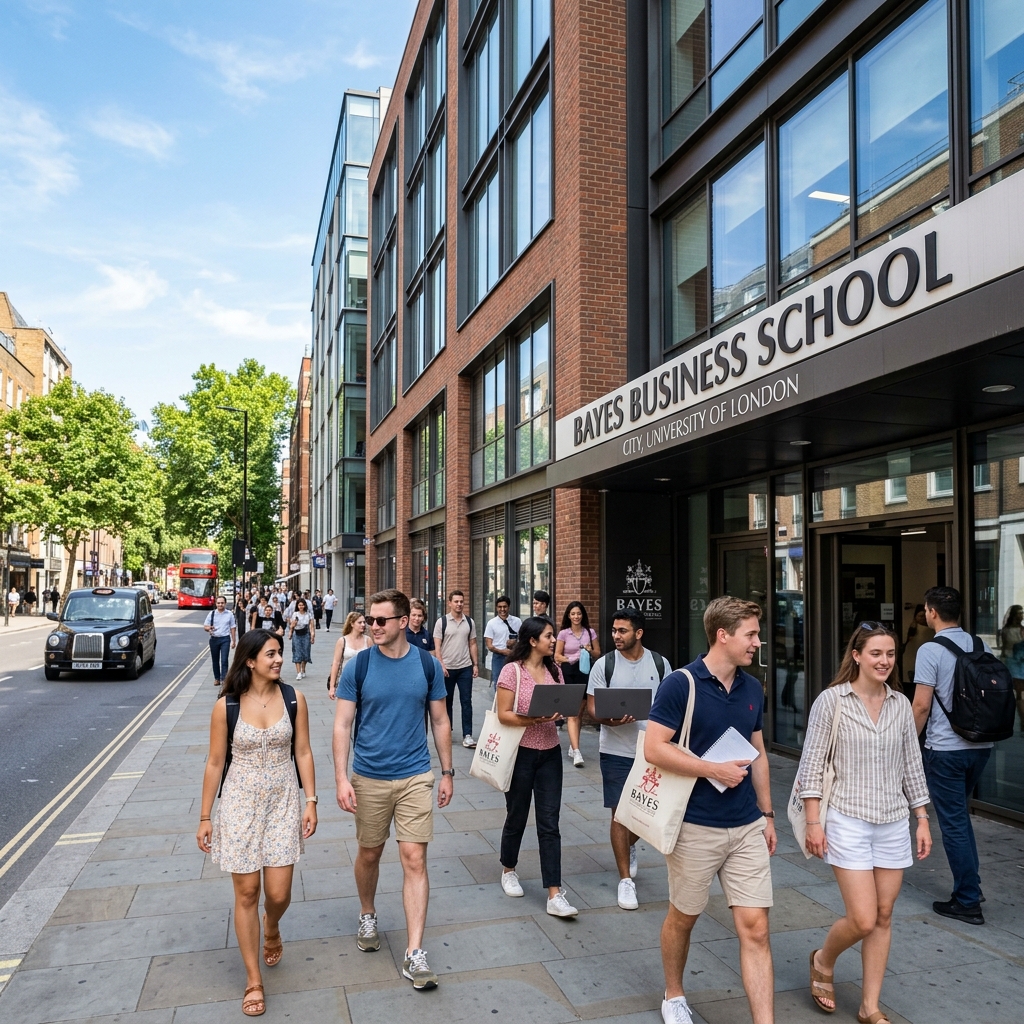
BSc Financial Economics
About this course
Financial economics applies the rigorous analytical tools of economics to the questions that arise in financial markets: how assets are priced, how risk is managed and transferred, how interest rates and exchange rates are determined, and how the decisions of investors, firms, and governments interact to shape economic outcomes. It is a discipline that sits at the intersection of academic economic theory and the practical world of finance, producing graduates who can think clearly about financial phenomena rather than simply applying received formulas. At City St George's, University of London this three-year full-time programme develops the analytical abilities of a trained economist with a strong focus on financial applications. You will study microeconomics, macroeconomics, econometrics, and financial theory, developing both quantitative skills and the capacity for rigorous economic argument. The programme includes a sandwich year and a year abroad, and a work placement is built into the degree, giving you professional experience in a financial or economic organisation alongside your studies. This combination of analytical training and real work experience has supported graduates into careers with firms in accountancy, management consultancy, banking, and financial analysis. The career destinations of financial economics graduates are broad and well rewarded. Investment banking, asset management, financial analysis, economic consultancy, the civil service, the Bank of England, and regulatory bodies all recruit graduates with the combination of economic and financial knowledge this degree provides. The quantitative and analytical skills developed through the degree are also valued in data science and technology-focused financial roles. Many graduates continue to professional qualifications such as the CFA, or pursue postgraduate study in economics, finance, or a related field with a view to specialist or research careers.
Syllabus & Modules
Typical curriculumStudent Satisfaction
National Student Survey - 10 respondents (58% response rate)
Similarly Ranked Alternatives


What comes next? 🎓
Choosing the right university starts with choosing the right school. Explore transparent, data-driven school profiles powered by official DfE statistics.
Explore Schools on WhatSchool.ai →