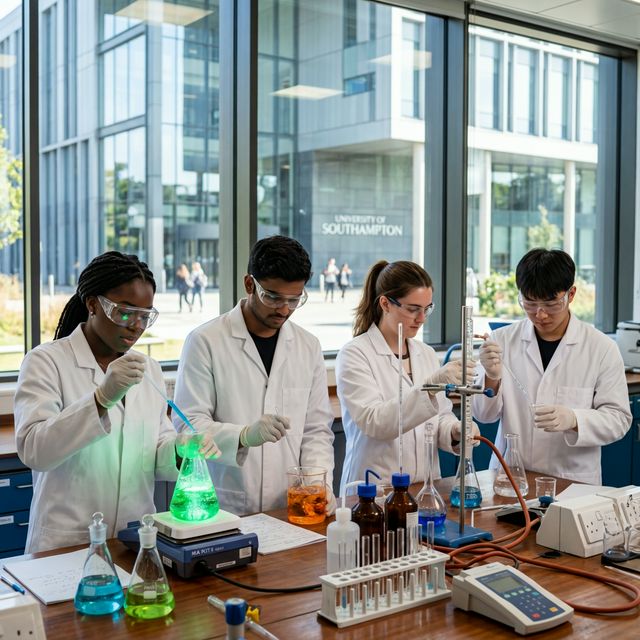
BSc Environmental Science: Water and the Environment
About this course
Environmental science with a focus on water and the environment addresses one of the most pressing resource challenges facing humanity. Water is fundamental to life, agriculture, industry, and ecosystems, yet freshwater resources are under increasing pressure from population growth, climate change, pollution, and overabstraction. Understanding how water moves through the environment, how it is affected by human activity, and how it can be managed sustainably requires the integration of hydrology, ecology, geochemistry, policy, and engineering perspectives that environmental science brings together. At the University of Southampton, this three-year, full-time BSc combines the theoretical foundations of environmental science with practical and project-based work that connects academic learning to real-world environmental problems. You will study the behaviour of water in rivers, groundwater systems, wetlands, and coastal environments, alongside the biological, chemical, and physical processes that determine water quality and ecosystem health. The programme develops field and laboratory skills alongside quantitative analysis and the capacity for independent scientific investigation. Southampton is a research-active university with particular strengths in ocean and earth science, and the programme benefits from that environment of enquiry. The typical entry tariff of 136 points reflects solid academic expectations for a science-based programme. Environmental science graduates focusing on water and the environment work in water companies, environmental agencies, consultancies, local authorities, and international development organisations. Roles include hydrologist, water quality scientist, environmental consultant, catchment manager, and policy analyst. The Environment Agency, Natural Resources Wales, SEPA, and private sector environmental consultancies all employ graduates with this background. Many graduates also go on to postgraduate study in hydrology, environmental management, water resources, or related fields, developing specialist expertise for research or senior professional roles.
Syllabus & Modules
Typical curriculumStudent Satisfaction
National Student Survey - 30 respondents (73% response rate)
Similarly Ranked Alternatives

What comes next? 🎓
Choosing the right university starts with choosing the right school. Explore transparent, data-driven school profiles powered by official DfE statistics.
Explore Schools on WhatSchool.ai →