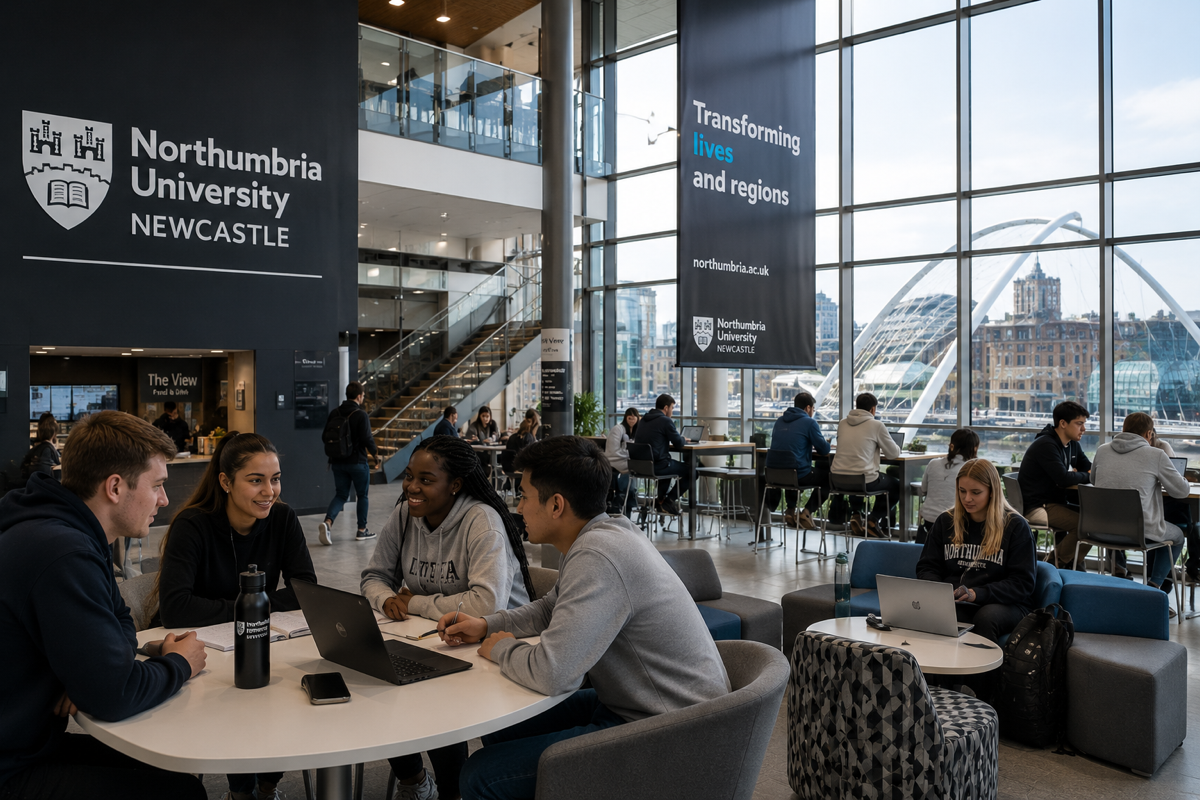
BA English Language (Extended Degree)
About this course
English language as an academic discipline is distinct from English literature: where literary study focuses on texts and their meanings, English language examines the structure, history, and social life of language itself. It is a discipline that asks how English works, how it has changed over time, why it varies across regions, communities, and social groups, how people acquire it, how it is used to construct identity and exercise power, and what it means for English to be a global language spoken by hundreds of millions of people for whom it is not a first tongue. The questions it raises are fundamental to communication, education, and social life. At Northumbria University, this four-year extended degree programme offers a rich combination of experiential features alongside the academic content: it includes a sandwich year, a year abroad, and work placement opportunities. The extended structure provides additional time to develop confidence and depth in the subject, and the combination of placement and international study means you graduate with significant professional experience and genuine cross-cultural awareness. You will study phonology, grammar, semantics, pragmatics, sociolinguistics, language acquisition, the history of English, and the methods of linguistic analysis, developing a precise and evidence-based understanding of how language works. A typical entry tariff of 120 points makes the programme broadly accessible. English language graduates work in journalism, publishing, education, speech and language therapy (with further professional training), communications, marketing, content writing, and the growing field of language technology and natural language processing. The discipline's emphasis on rigorous analysis and clear communication is valued by employers across many sectors. Many graduates pursue postgraduate study in linguistics, applied linguistics, TESOL (Teaching English to Speakers of Other Languages), or communication, and the combination of placement experience and international exposure makes them competitive candidates for a wide range of roles.
Syllabus & Modules
Typical curriculumStudent Satisfaction
National Student Survey - 10 respondents (55% response rate)
Similarly Ranked Alternatives



What comes next? 🎓
Choosing the right university starts with choosing the right school. Explore transparent, data-driven school profiles powered by official DfE statistics.
Explore Schools on WhatSchool.ai →