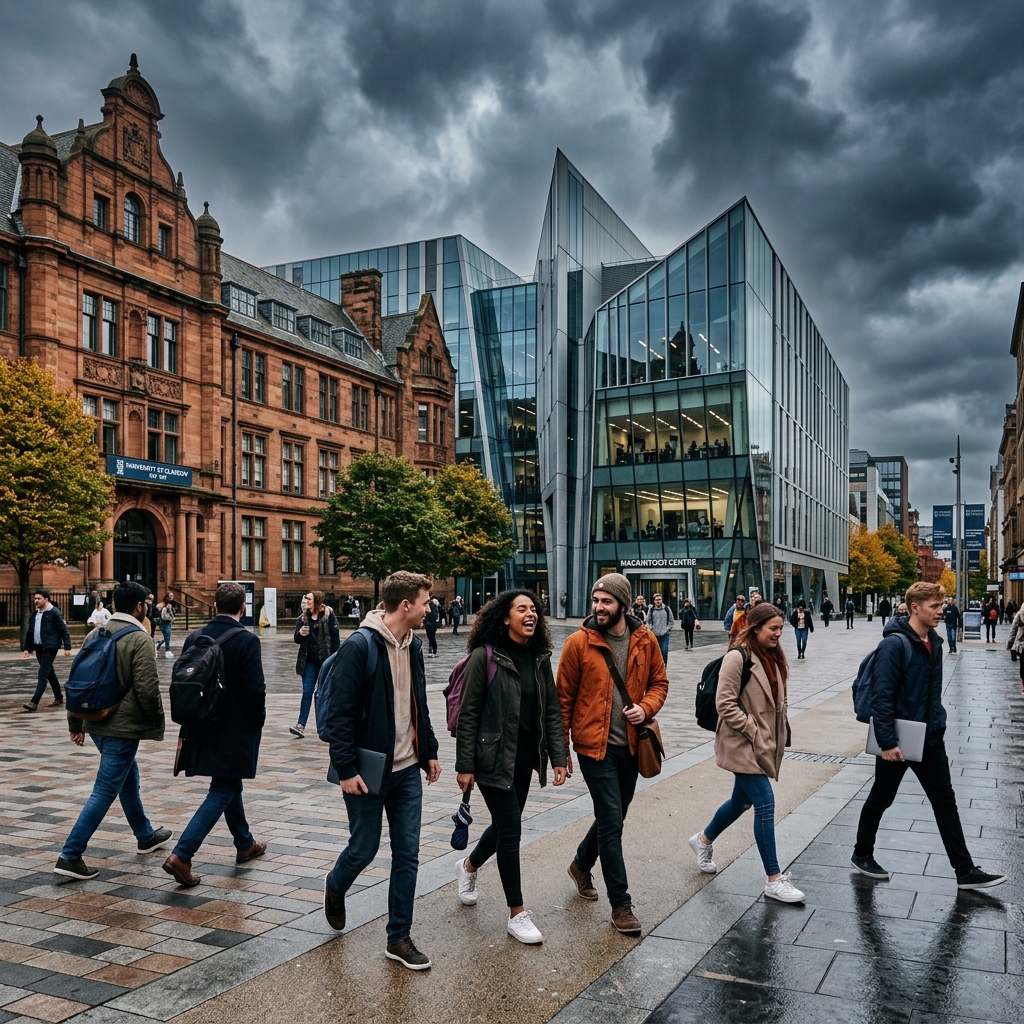
BA English and Politics and International Relations
About this course
English and politics and international relations is a three-subject combination that brings together the study of language and literature with the analysis of political life, power and global affairs. English literature develops your sensitivity to language, your ability to interpret complex texts and your capacity to understand how stories and arguments are constructed and received. Politics and international relations, meanwhile, gives you the frameworks to analyse how power is exercised within and between states, how political ideas have developed over time and how the international system shapes global outcomes. The three subjects share a deep interest in how meaning, authority and conflict are produced and contested. At the University of Strathclyde, this four-year full-time programme includes a year abroad, and the English component gives you a grounding in both classic texts and newer fields of literary study. You will engage with literature from different periods and traditions alongside political theory, comparative politics, security studies and international relations, developing both close reading skills and the analytical frameworks needed to engage with contemporary political realities. The typical entry tariff of 200 UCAS points reflects Strathclyde's competitive admissions across these subjects. Graduates from programmes combining English with politics and international relations go on to careers in journalism, publishing, law, the diplomatic service, the civil service, think tanks, international organisations, politics itself, communications and the arts. The combination of analytical writing skills and political understanding is particularly valuable in media and communications roles, and in any field where the ability to interpret complex information and communicate clearly to different audiences matters. Many graduates pursue postgraduate study in English literature, politics, international relations or media, and a number go on to professional qualifications in law or journalism.
Syllabus & Modules
Typical curriculumStudent Satisfaction
National Student Survey - 105 respondents (70% response rate)
Similarly Ranked Alternatives


What comes next? 🎓
Choosing the right university starts with choosing the right school. Explore transparent, data-driven school profiles powered by official DfE statistics.
Explore Schools on WhatSchool.ai →