BEng Electrical and Mechanical Engineering
About this course
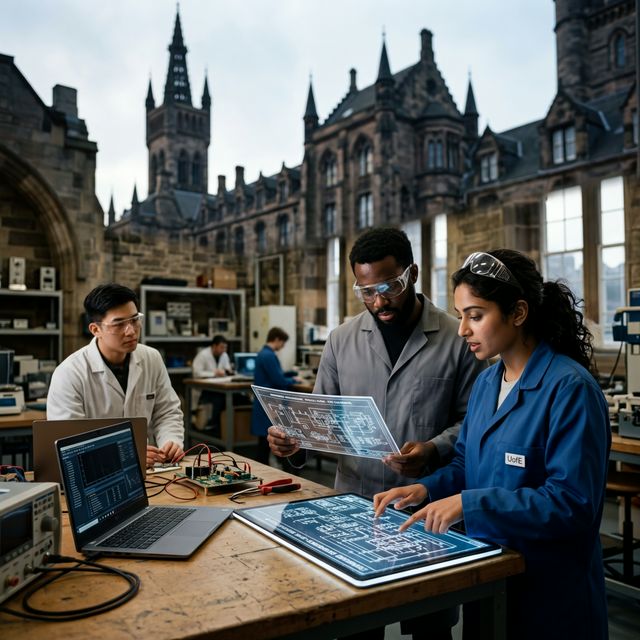
Electrical and mechanical engineering together cover the two foundational branches of engineering that underpin modern technology. Mechanical engineering addresses the design and analysis of physical systems, from structures and machines to fluid systems and thermal processes. Electrical engineering deals with energy, electronics, signals, and control. The combination matters because the most significant engineering challenges of our time, from hybrid vehicles and renewable energy systems to robotics and advanced manufacturing, require engineers who can work fluently across both domains. At Edinburgh, the programme prepares electromechanical engineers to work on everything from energy generation and hybrid vehicles to aircraft design and satellite technology. These are described as creative problem-solvers who are skilled at working in interdisciplinary teams to address society's increasingly complex challenges, and the curriculum is built around developing exactly that capacity. You will study the core engineering sciences, including thermodynamics, fluid mechanics, structural analysis, circuit theory, and electronic systems, and develop your skills in design, modelling, and analysis. The programme includes a year abroad, broadening your experience and giving you an international engineering perspective. It runs over four years full-time, with a typical entry tariff of 232 points. Graduates of electrical and mechanical engineering programmes are among the most employable engineers in the UK and internationally. The energy sector, automotive and aerospace industries, robotics and automation companies, defence, and infrastructure consultancies all actively recruit from this field. Many graduates pursue Chartered Engineer status through professional bodies and go on to senior technical and management roles. Postgraduate study in specialist areas such as power systems, mechatronics, or renewable energy is also a common route.
Syllabus & Modules
Typical curriculumStudent Satisfaction
National Student Survey - 10 respondents (91% response rate)
Similarly Ranked Alternatives


What comes next? 🎓
Choosing the right university starts with choosing the right school. Explore transparent, data-driven school profiles powered by official DfE statistics.
Explore Schools on WhatSchool.ai →