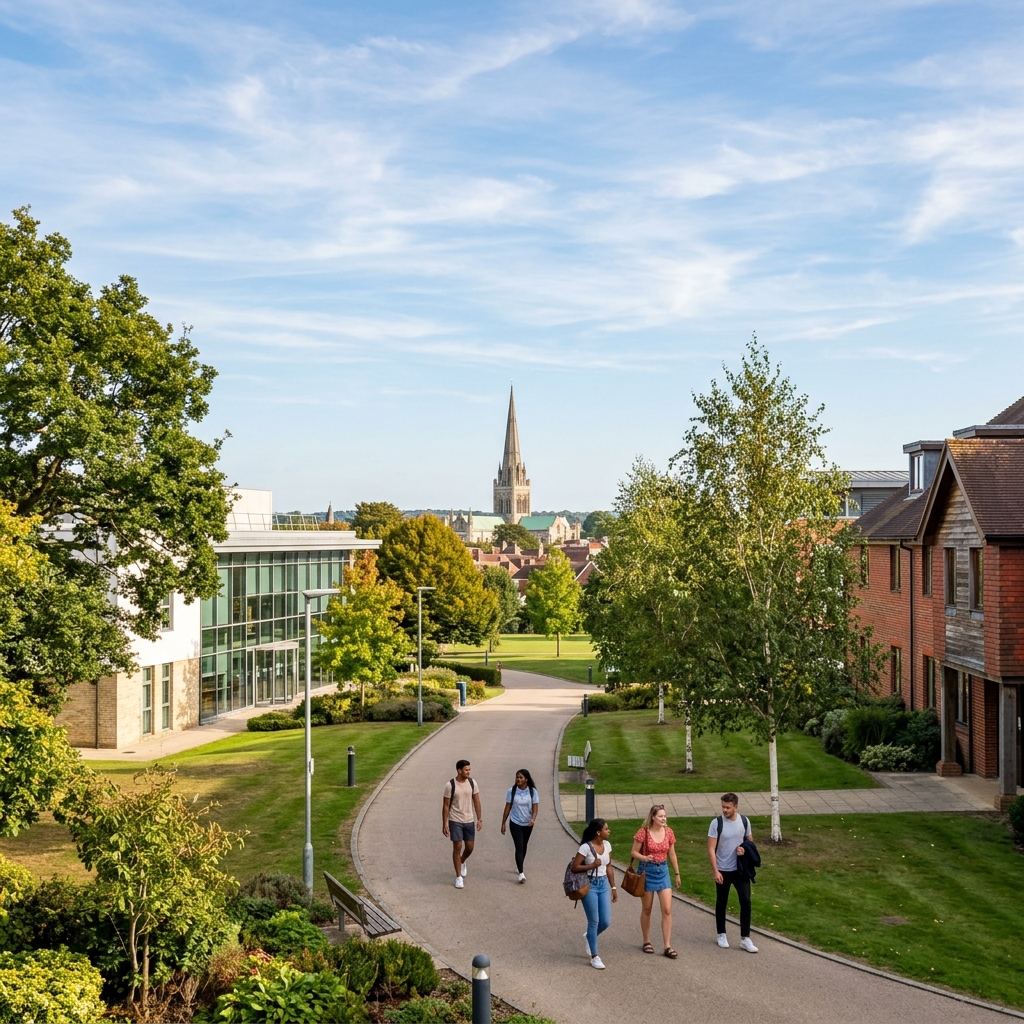
BSc Educational Psychology
About this course
Educational psychology applies the science of mind and behaviour to the contexts in which people learn, develop and encounter difficulty. It is a discipline concerned with understanding how children and young people grow intellectually, emotionally and socially, and with identifying the psychological factors that help or hinder learning in educational settings. This involves drawing on developmental psychology, cognitive science, social psychology and research methods to ask evidence-based questions about education and to translate findings into meaningful support for children, families and schools. This three-year full-time programme at the University of Chichester develops your knowledge of psychological principles and their application to educational contexts. You will build a thorough understanding of child and adolescent development, exploring how cognitive abilities, language, social relationships and emotional wellbeing change over time and how these changes interact with educational experience. The course examines the psychology of learning and teaching, special educational needs and disabilities, mental health in educational settings, and the design of interventions that support children who are struggling. You will also develop strong research skills, learning to design studies, analyse data and evaluate evidence, which is fundamental to evidence-based professional practice. The course is designed to develop both your knowledge and your understanding of how to apply psychological principles to an educational context, and is particularly well suited if you are aiming to become an educational psychologist or to work in a related professional role with children and young people. Graduates are well prepared for a range of roles in education, health, social care and research. Many go on to postgraduate training to qualify as educational psychologists, a profession regulated by the Health and Care Professions Council. Others work in schools as learning support specialists, in local authority children's services, in charities focused on children's mental health, or in research and policy roles. Postgraduate study in psychology, education, child development or counselling is also a common next step.
Syllabus & Modules
Typical curriculumStudent Satisfaction
National Student Survey - 10 respondents (91% response rate)
Similarly Ranked Alternatives



What comes next? 🎓
Choosing the right university starts with choosing the right school. Explore transparent, data-driven school profiles powered by official DfE statistics.
Explore Schools on WhatSchool.ai →