BSc Economics
About this course
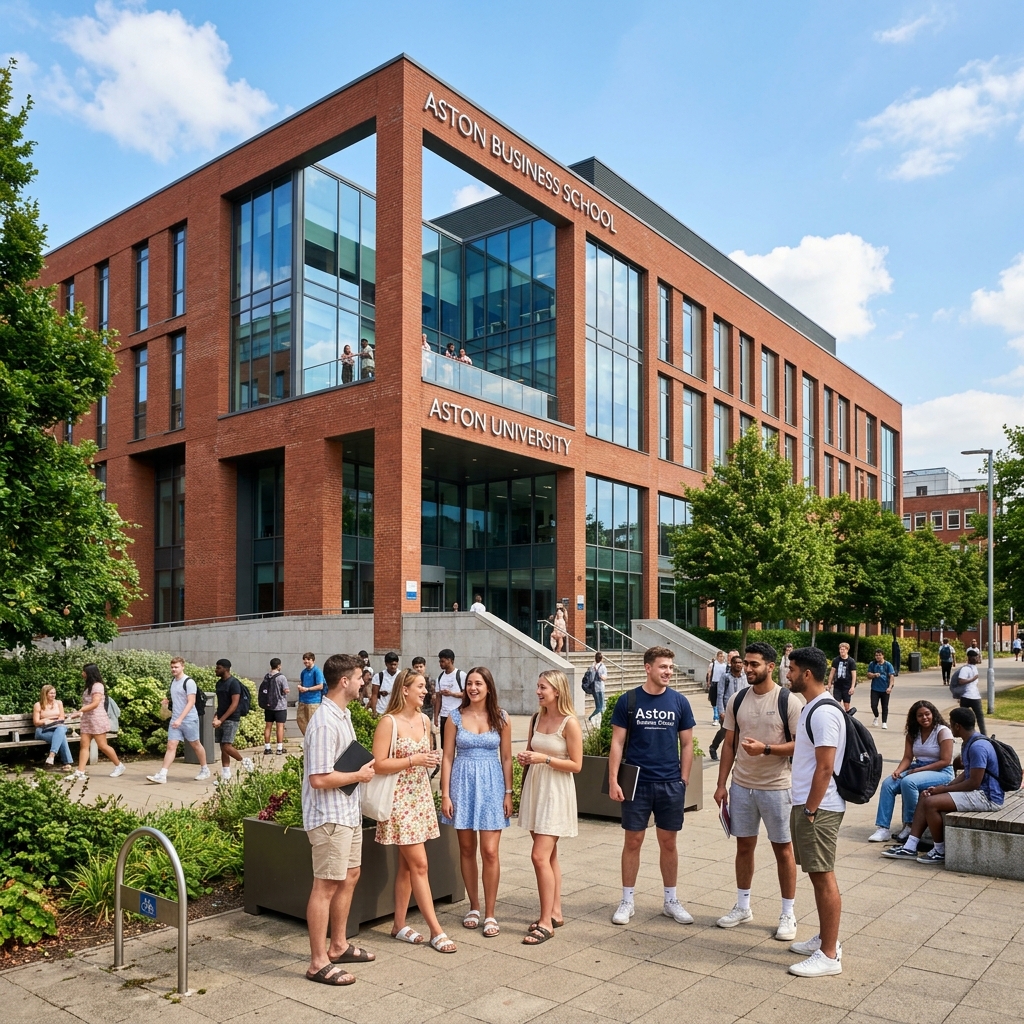
Economics is the discipline concerned with how individuals, organisations, and societies make decisions about the allocation of scarce resources, and with the consequences of those decisions for prosperity, inequality, welfare, and sustainability. It combines mathematical and statistical rigour with a genuine engagement with real-world problems, from the behaviour of consumers and firms to the design of tax systems, the management of macroeconomic policy, and the economics of climate change. The discipline trains you to think clearly about incentives, trade-offs, and the unintended consequences of well-intentioned policies. At Aston University in Birmingham, this four-year full-time programme includes a year abroad, giving you the opportunity to study at a partner institution in another country and to experience economic policy and business culture in a different national context. Aston has a long-standing reputation for professionally oriented education, and the economics programme combines rigorous theoretical training with an awareness of the contexts in which economic analysis is applied. You will study microeconomics, macroeconomics, econometrics, and a range of applied fields including labour economics, development economics, international trade, and financial economics. The year abroad adds an international dimension that enriches both your academic work and your professional profile. A typical entry tariff of 120 points makes the programme accessible. Economics graduates are highly sought after by a wide range of employers, including financial institutions, consulting firms, government departments, central banks, international organisations, and the private sector in roles that require analytical rigour and an understanding of economic systems. The year abroad strengthens the graduate profile for roles with an international dimension. Many graduates continue to postgraduate study in economics, finance, public policy, or a related discipline, and the analytical foundation the degree provides is excellent preparation for research-oriented careers. Teaching, the civil service, and economic journalism are also common destinations.
Syllabus & Modules
Typical curriculumStudent Satisfaction
National Student Survey - 65 respondents (71% response rate)
Similarly Ranked Alternatives


What comes next? 🎓
Choosing the right university starts with choosing the right school. Explore transparent, data-driven school profiles powered by official DfE statistics.
Explore Schools on WhatSchool.ai →