MA Economics and Modern History
About this course
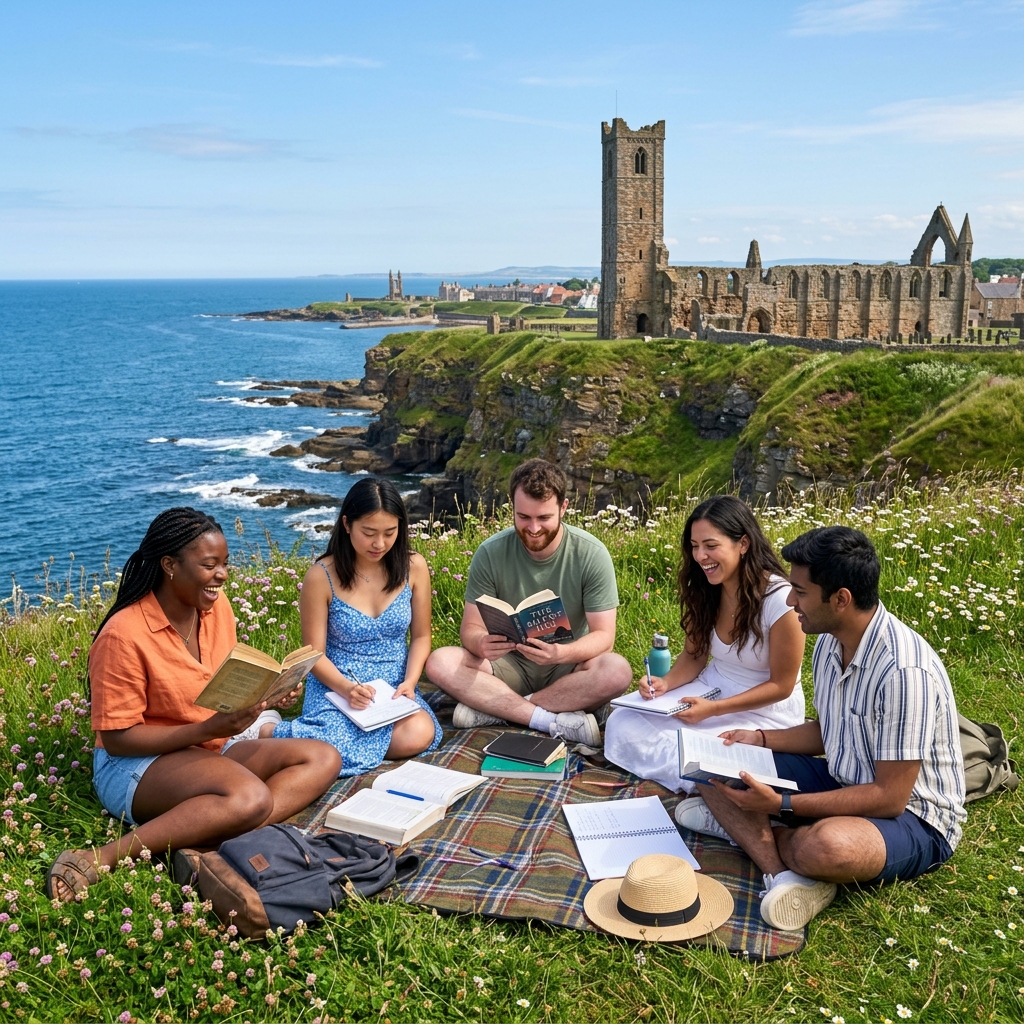
Economics and modern history is a pairing that addresses two of the most important dimensions of the social world: the quantitative and analytical frameworks needed to understand economic life, and the historical knowledge needed to understand how we got here. Modern history asks what happened and why it happened across the turbulent centuries from around 1500 to the present, engaging with the great political, social, economic and cultural transformations that have shaped the contemporary world. Economics provides the rigorous analytical toolkit to model and understand the material dimensions of those transformations and of the world they produced. At the University of St Andrews, which offers one of the finest honours programmes in both economics and history in Scotland, this four-year degree builds a structured, cumulative and rigorous foundation in economic concepts, principles, analysis and quantitative methods, as the university's own description notes, alongside a deep historical education. You will develop analytical and decision-making abilities through training in model-based methods alongside historical research skills including archival work, source criticism and interpretive argument. A year abroad is part of the programme, giving you the opportunity to study at a partner institution in another country and to develop an international perspective on both disciplines. The combination develops a genuinely rare set of capabilities: the quantitative rigour and formal modelling of economics alongside the contextual depth and interpretive sophistication of historical analysis. These together are more powerful than either alone. Graduates go on to careers in financial services, economic research, government, policy analysis, international organisations, journalism, consulting, academia and many other fields where both analytical precision and historical understanding are valued. Further study in economics, history, economic history or related disciplines is also a well-established route.
Syllabus & Modules
Typical curriculumStudent Satisfaction
National Student Survey - 110 respondents (53% response rate)
Similarly Ranked Alternatives
What comes next? 🎓
Choosing the right university starts with choosing the right school. Explore transparent, data-driven school profiles powered by official DfE statistics.
Explore Schools on WhatSchool.ai →