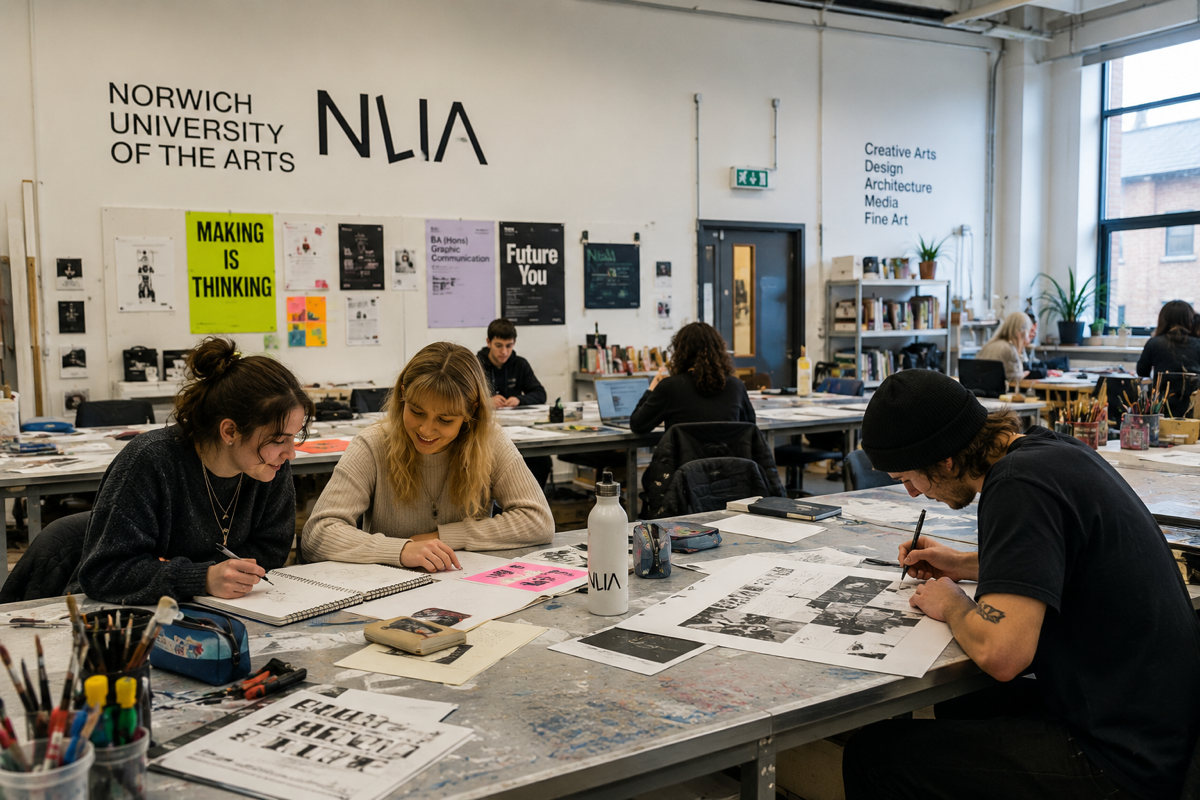
BA Design for Publishing
About this course
Design for publishing sits at the intersection of visual communication, typography, and editorial practice, concerned with how books, magazines, digital publications, and other designed objects are shaped to communicate effectively and beautifully with their readers. It is a discipline that takes typography seriously as both a technical and an aesthetic practice, and it requires an understanding of how design choices, from type selection and grid structure to image-text relationships and production materials, affect how readers experience and value what they hold in their hands or see on their screens. At Norwich University of the Arts, this four-year full-time programme is taught within a specialist arts and design institution with a strong reputation for professional creative education. You will develop skills in editorial design, typography, book design, branding for publications, digital publishing, and the production processes that take a designed object from concept to finished form. The programme engages with the history of publishing design and with contemporary practice across print and digital media, developing both your technical fluency and your critical understanding of how design functions within the broader publishing industry. Norwich University of the Arts benefits from its location in a city with a rich cultural life and from its close connections to the creative industries in the region and beyond. A typical entry tariff of 136 points reflects the specialist and competitive nature of the programme. Graduates of design for publishing programmes work as editorial designers, book designers, art directors, digital content designers, brand designers, and production managers in publishing houses, design agencies, magazines, newspapers, and digital media organisations. The combination of craft skills in typography and layout with a broader understanding of publishing culture and production practice is valued by employers across the sector. Further study at master's level or professional development through industry practice are both available paths for graduates who want to develop their creative voice further.
Syllabus & Modules
Typical curriculumStudent Satisfaction
National Student Survey - 35 respondents (95% response rate)
Similarly Ranked Alternatives



What comes next? 🎓
Choosing the right university starts with choosing the right school. Explore transparent, data-driven school profiles powered by official DfE statistics.
Explore Schools on WhatSchool.ai →