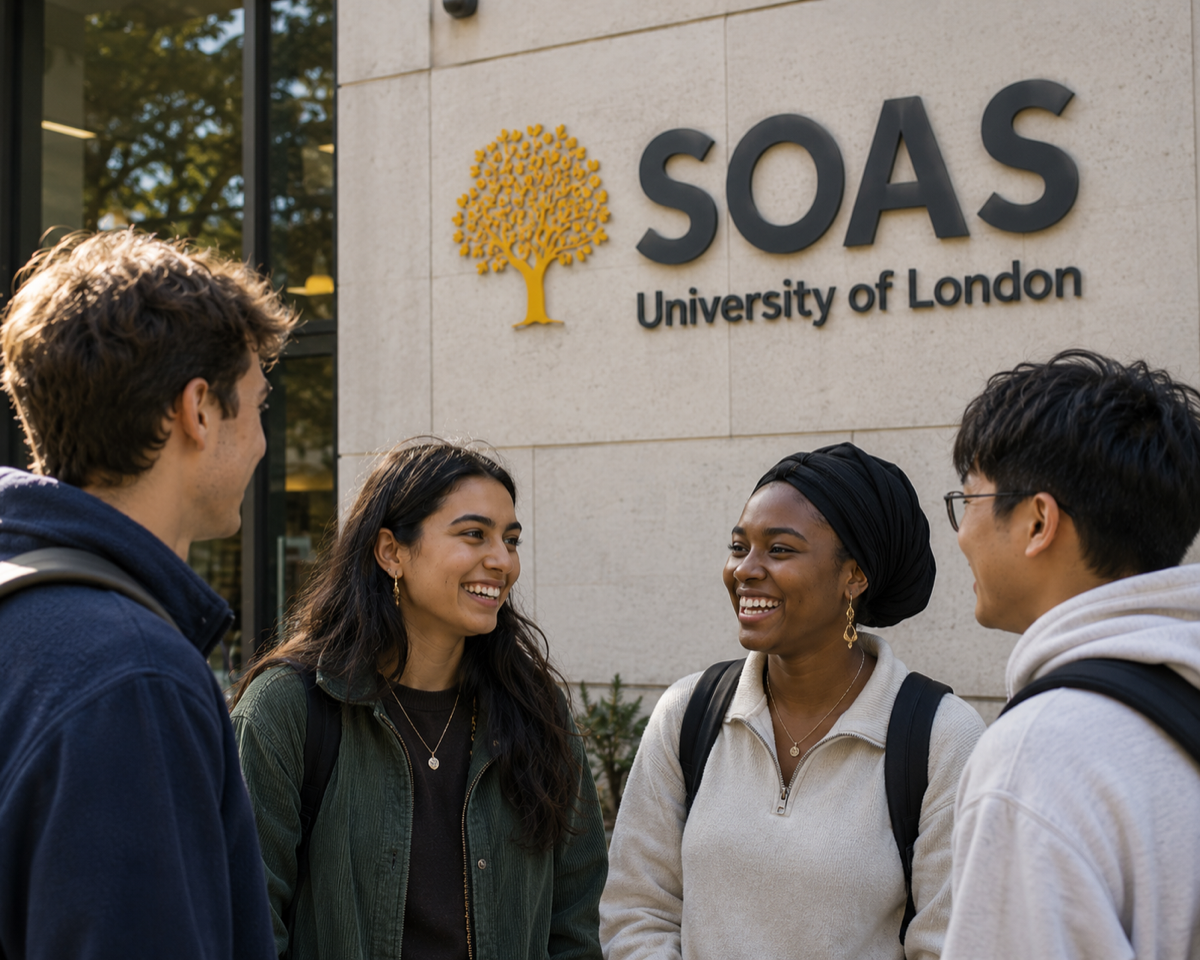
BA Creative Arts and Politics
About this course
Creative arts and politics is a combination that takes seriously the idea that art and political life are not separate domains. The arts have always been a medium for political expression, dissent, community-building, and the imagining of alternative possibilities, while political movements and institutions have shaped what art gets made, funded, and distributed. Studying the two together gives you both the creative practice skills and the conceptual and analytical tools to understand why this relationship matters, and how it works across different contexts and historical moments. At the School of Oriental and African Studies, this three-year full-time programme approaches both creative arts and politics with a distinctive emphasis on the global South and on traditions beyond the Western mainstream. You will study artistic practices from across Asia, Africa, and the Middle East alongside political theory, international relations, and the analysis of political movements, institutions, and structures in these regions and globally. A foundation year is available for students who want additional preparation before entering the main degree. SOAS's commitment to non-Eurocentric scholarship means you will encounter political and artistic traditions that are routinely overlooked in standard curricula, developing a genuinely global perspective on both fields. With a typical entry tariff of 136 UCAS points, this degree attracts students who are intellectually curious, politically engaged, and interested in the intersection of creativity and social change. Graduates move into careers in the arts, cultural policy, international development, NGOs, journalism, education, community arts, arts administration, and political campaigning. The combination of creative and analytical skills is particularly well suited to roles in cultural diplomacy, human rights advocacy, and the growing range of organisations that use arts and culture as tools for political and social engagement. Many graduates continue to postgraduate study in politics, development studies, arts management, or a regional specialism.
Syllabus & Modules
Typical curriculumStudent Satisfaction
National Student Survey - 170 respondents (64% response rate)
Similarly Ranked Alternatives



What comes next? 🎓
Choosing the right university starts with choosing the right school. Explore transparent, data-driven school profiles powered by official DfE statistics.
Explore Schools on WhatSchool.ai →