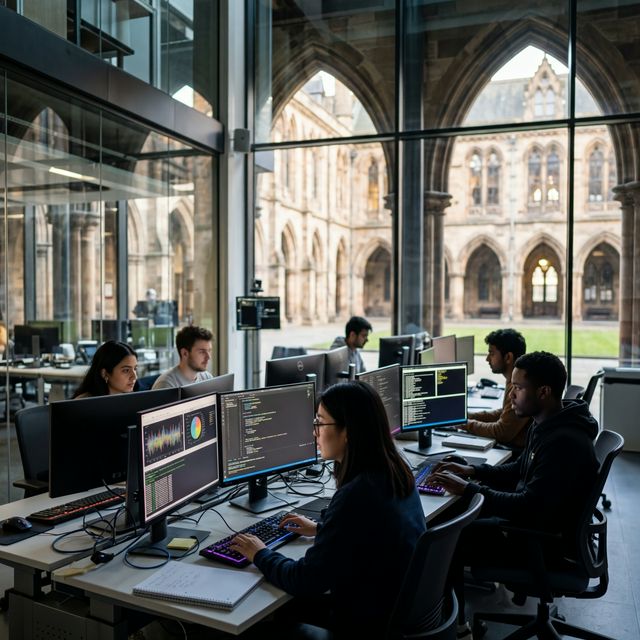
MA Computing Science/English Language
About this course
Computing science and English language is a combination that sits at an increasingly important intersection in the modern world. Computing science is the discipline concerned with computation, algorithms, software engineering, artificial intelligence and the design of complex digital systems. English language and linguistics investigates how the English language works: its structure and grammar, its variation across communities and contexts, and its role in shaping communication and social identity. As AI systems learn to process, generate and translate natural language, and as the technology industry increasingly recognises the importance of clear, culturally sensitive communication, the combination of deep computing knowledge with linguistic expertise is becoming genuinely valuable. At the University of Glasgow, the four-year full-time MA programme develops your skills in both disciplines with rigour. Computing science at Glasgow covers programming, software engineering, algorithms, data structures, computer systems, artificial intelligence, human-computer interaction and network systems. The English language strand develops your understanding of the structure and history of English, sociolinguistics and the analysis of language in use. The degree includes a year abroad, giving you the opportunity to study in a different academic and cultural environment. Glasgow is a strong environment for both computing science and linguistics, with active research communities in natural language processing, computational linguistics and artificial intelligence that connect the two disciplines. Graduates work in software development, natural language processing, UX and technical writing, AI research, human-computer interaction, linguistics consultancy, education and journalism. Postgraduate study in computing science, computational linguistics, AI or language technology is a natural continuation.
Syllabus & Modules
Typical curriculumStudent Satisfaction
National Student Survey - 140 respondents (68% response rate)
Similarly Ranked Alternatives

What comes next? 🎓
Choosing the right university starts with choosing the right school. Explore transparent, data-driven school profiles powered by official DfE statistics.
Explore Schools on WhatSchool.ai →