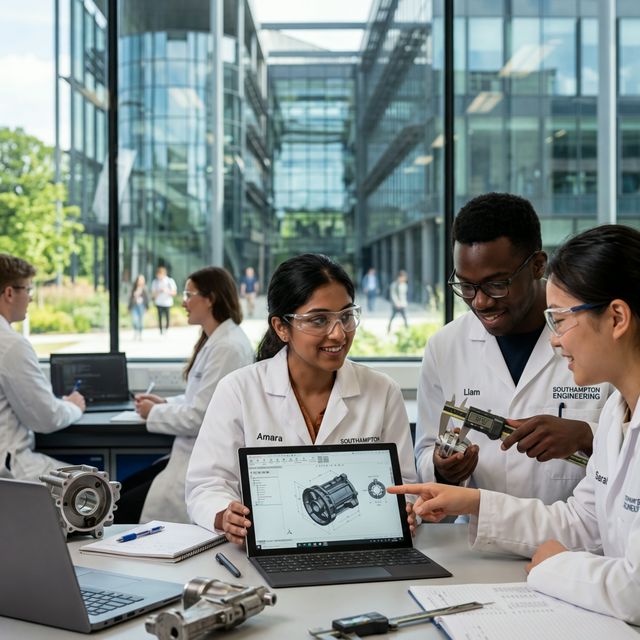
MEng Civil Engineering with Industrial Placement Year
About this course
Civil engineering shapes the physical world in ways that most people take for granted: the roads, bridges, tunnels, water systems, coastal defences, and buildings that make modern life possible are all the product of civil engineering knowledge and practice. The discipline is deeply connected to questions of sustainability and resilience, as the infrastructure decisions made today will define how societies cope with climate change, population growth, and resource constraints for generations to come. This five-year integrated master's programme at the University of Southampton goes beyond a standard three-year degree to provide advanced study and, crucially, an industrial placement year in which you gain direct professional experience in an engineering environment. The programme covers the full range of civil engineering fundamentals, including structural analysis, materials, geotechnics, hydraulics, and environmental engineering, before moving into more advanced master's-level work in the later years. A master's-level group design project provides the kind of complex, open-ended challenge that reflects the problems civil engineers face in practice: projects that require collaboration, creative problem-solving, and the integration of knowledge from multiple areas. The industrial placement year is a particularly important element, giving you exposure to professional practice and the opportunity to build relationships in the industry. Graduates of integrated master's programmes in civil engineering are well prepared to pursue chartered engineer status through relevant professional bodies, a credential that opens senior roles across the construction, infrastructure, and environmental sectors. Employers include engineering consultancies, contractors, local authorities, national infrastructure organisations, and multinational firms working on large-scale projects. Postgraduate research is another route for those who want to contribute to the development of new materials, design methods, or sustainable engineering solutions. The programme's combination of academic rigour and industrial experience provides a strong platform for a career that is both technically demanding and socially significant.
Syllabus & Modules
Typical curriculumStudent Satisfaction
National Student Survey - 45 respondents (75% response rate)
Similarly Ranked Alternatives

What comes next? 🎓
Choosing the right university starts with choosing the right school. Explore transparent, data-driven school profiles powered by official DfE statistics.
Explore Schools on WhatSchool.ai →