
High Drop-out Rate Alert
25% of students drop out or transfer from this specific course. Consider asking why on an open day.
BSc Chemistry
About this course
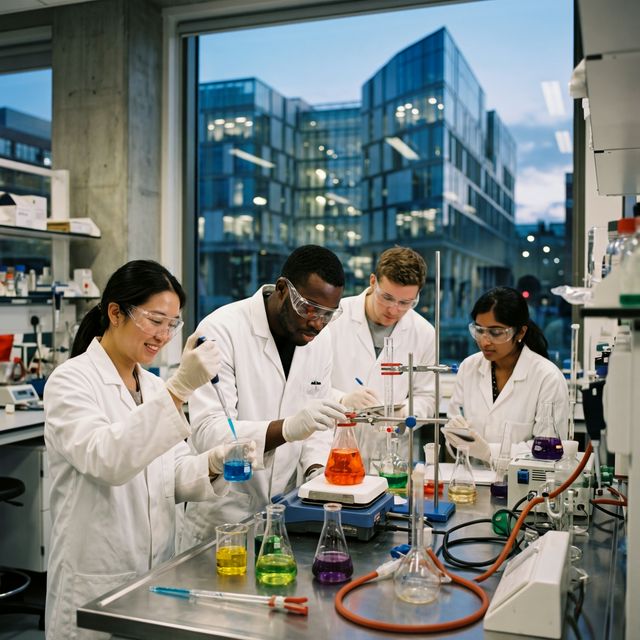
Chemistry is one of the central natural sciences, concerned with the composition, structure, properties, and transformation of matter. It is the discipline that underpins the development of medicines, materials, fuels, and the chemical processes on which modern industry depends. At its core, chemistry asks how atoms and molecules behave and interact, and the answers to those questions have produced everything from life-saving drugs to lightweight composite materials, from semiconductor devices to the understanding of how pollutants move through the environment. This three-year full-time programme at the University of Sussex includes a foundation year and incorporates a sandwich year in industry, a year abroad, and a work placement, making it an unusually structured and professionally rich chemistry degree. You will study the three main branches of chemistry, organic, inorganic, and physical, developing both theoretical understanding and strong laboratory skills in synthesis, analysis, and characterisation. The foundation year provides a supported entry route for students whose prior qualifications would benefit from additional preparation before degree-level study begins. The sandwich and work placement opportunities place you in professional chemistry environments during your degree, building experience that is highly valued by employers. The year abroad adds an international dimension to your education. With a typical entry tariff of 120 points, the programme is designed to be accessible while providing a rigorous scientific education. Chemistry graduates are among the most employable of science graduates, because the quantitative, analytical, and problem-solving skills the degree develops transfer across many fields. Pharmaceutical companies, chemical manufacturers, materials companies, and environmental organisations all employ chemists in research, development, quality, and regulatory roles. Forensic science, food science, and the energy sector are further employment areas. Teaching is a well-established route, and chemistry teachers are consistently in demand. The foundation that chemistry provides also opens postgraduate routes in chemical engineering, drug discovery, environmental chemistry, and materials science, as well as professional training in medicine, dentistry, or veterinary science for those who pursue those routes after graduation.
Syllabus & Modules
Typical curriculumStudent Satisfaction
National Student Survey - 15 respondents (63% response rate)
Similarly Ranked Alternatives



What comes next? 🎓
Choosing the right university starts with choosing the right school. Explore transparent, data-driven school profiles powered by official DfE statistics.
Explore Schools on WhatSchool.ai →