BSc Chemical Sciences
About this course
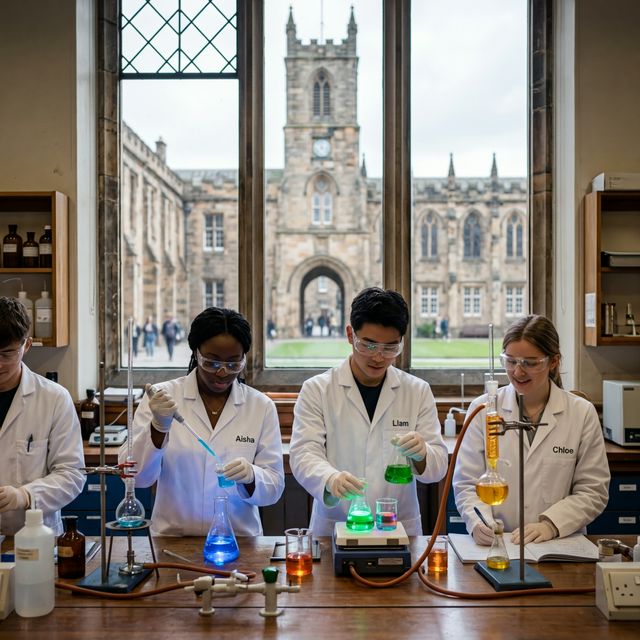
Chemistry is one of the central natural sciences, occupying the territory between the physics of atoms and particles and the biology of living systems. It is the discipline of composition, structure, properties, and reactions: how matter is constituted, how substances transform in chemical reactions, and how those transformations can be directed to create new molecules and materials with useful properties. Chemistry underpins an extraordinary range of modern technologies and industries, from pharmaceuticals and agrochemicals to materials science, energy storage, water purification, and food production. At the University of St Andrews, this four-year full-time programme teaches you the fundamentals of chemistry across its classical branches, including organic, inorganic, and physical chemistry, while also engaging you with the role of chemical science in contemporary technologies and industries. The BSc in Chemical Sciences is distinctive in allowing you to include a modest component of a non-chemistry subject at honours level, with options including science communication, psychology, management, or economics, giving you the chance to broaden your intellectual formation in a way that is unusual in a chemistry degree. A year abroad is built into the programme, broadening your academic experience. The typical entry tariff of 216 points reflects the high academic demands of entry to St Andrews. You will develop rigorous experimental and analytical skills, deep understanding of molecular science, and the quantitative reasoning that chemistry demands. Graduates pursue careers in the pharmaceutical, chemical, materials, and energy industries, in research, in analytical and quality laboratories, and in scientific consulting and regulatory affairs. Many continue to postgraduate study in chemistry, chemical biology, materials science, or related fields. The quantitative and problem-solving skills that chemistry develops are also valued in finance, data science, and technical consultancy.
Syllabus & Modules
Typical curriculumStudent Satisfaction
National Student Survey - 75 respondents (70% response rate)
Similarly Ranked Alternatives

What comes next? 🎓
Choosing the right university starts with choosing the right school. Explore transparent, data-driven school profiles powered by official DfE statistics.
Explore Schools on WhatSchool.ai →