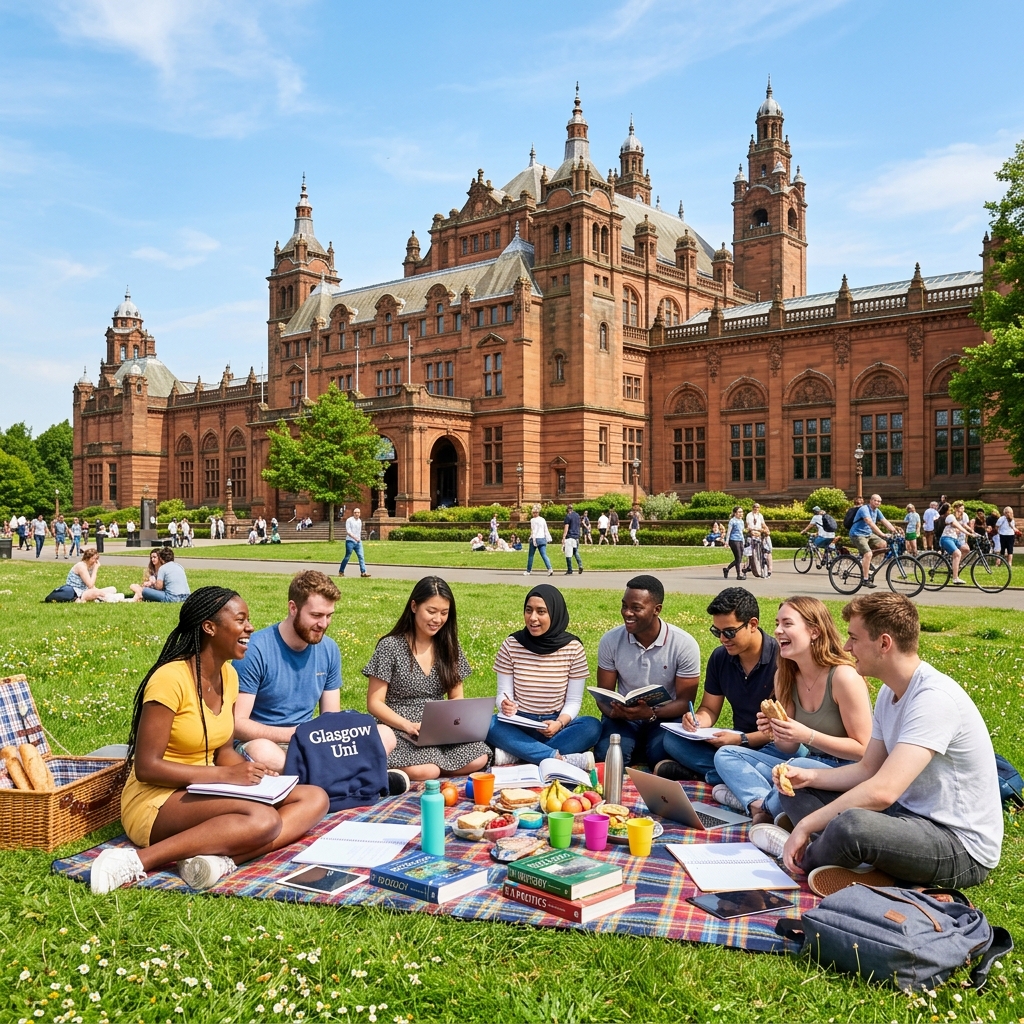
MA(SocSci) Central & East European Studies/Sociology
About this course
Central and East European Studies and Sociology is a combination that pairs regional depth with broad analytical frameworks for understanding society. Central and East European Studies focuses on a region that has been at the centre of some of the twentieth and twenty-first centuries' most dramatic historical events: the upheavals of two world wars, the rise and fall of communist regimes, the post-1989 transitions, and the contemporary challenges of populism, democratic backsliding, and geopolitical conflict. Sociology provides the conceptual tools to analyse the social structures, inequalities, and processes of change that have shaped the region and that continue to define its politics and culture today. The four-year full-time programme at the University of Glasgow charts the key issues from the Baltic to the Balkans and from Berlin to Vladivostok, engaging with the tumultuous period of the region's history including war, revolution, and widespread social and economic change, the collapse of communism, and the profound social transformations that continue today in the rise of populism in Central and South-East Europe, the Russo-Ukrainian war, and instability in the Caucasus and Central Asia. Your sociology studies develop the analytical frameworks needed to understand how these political and historical processes are embedded in social structures and cultural change, giving you the tools to move between empirical analysis and theoretical interpretation. A year abroad gives you the opportunity to study in the region or at a partner institution with related expertise. With a typical entry tariff of 184 points, the programme is intellectually demanding and suited to students with genuine curiosity about this pivotal region and about social science more broadly. Graduates pursue careers in international organisations, diplomacy, journalism, policy research, the civil service, NGOs, and academia.
Syllabus & Modules
Typical curriculumStudent Satisfaction
National Student Survey - 60 respondents (65% response rate)
What comes next? 🎓
Choosing the right university starts with choosing the right school. Explore transparent, data-driven school profiles powered by official DfE statistics.
Explore Schools on WhatSchool.ai →