High Drop-out Rate Alert
17% of students drop out or transfer from this specific course. Consider asking why on an open day.
BSc Biology with Integrated Foundation Year
About this course
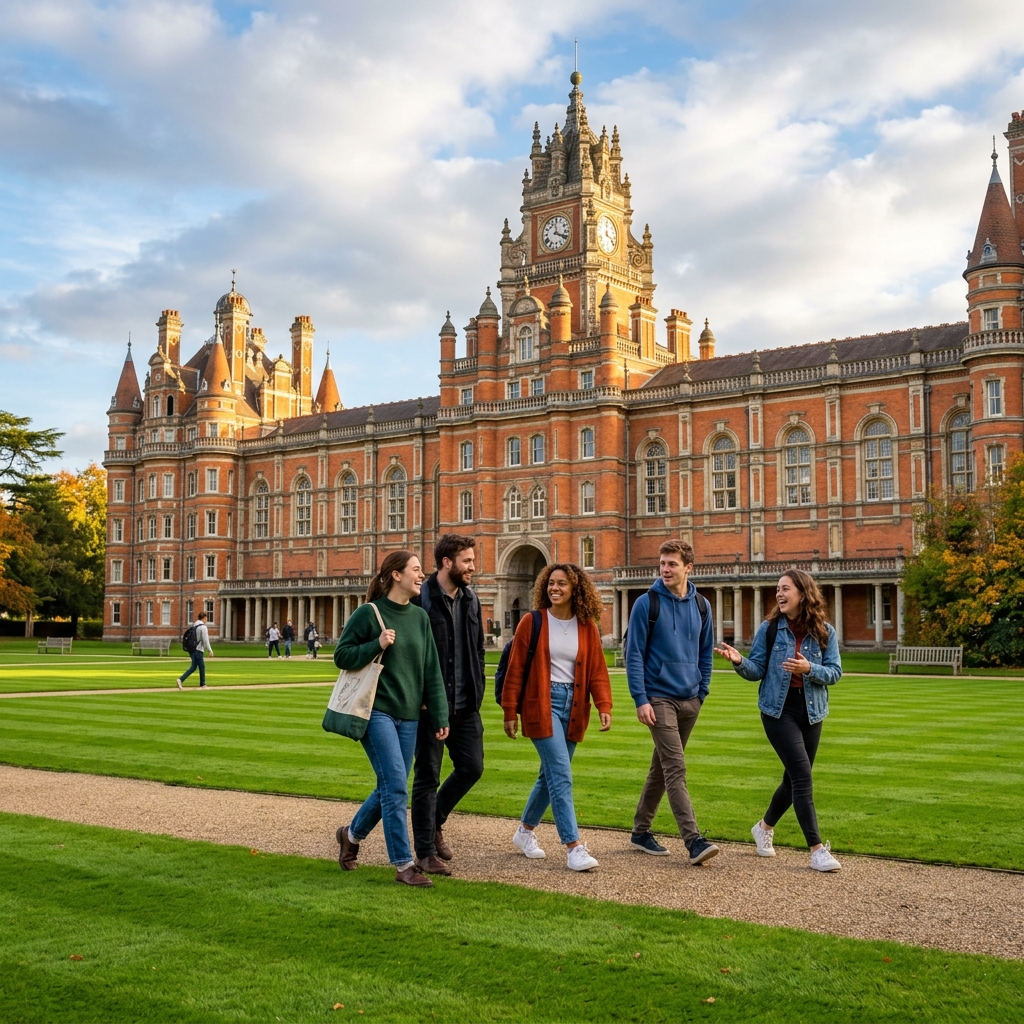
Biology is the science of life: the study of living organisms, the processes that sustain them, the relationships between them, and the evolutionary history that connects all living things. It is a discipline of extraordinary scope, ranging from the molecular biology of genes and proteins to the ecology of whole ecosystems, and a degree in biology develops your ability to think across these scales, connecting mechanism to function and individual organism to population and environment. At Royal Holloway, University of London you will study across four years on a full-time programme, beginning with an integrated foundation year that develops your scientific skills and confidence before you proceed to the full degree. Successful completion of the foundation year also allows transfer to related degrees in zoology or ecology and conservation, giving you flexibility to follow your interests as they develop. The main programme includes a sandwich year for professional experience, a year abroad for international study, and work placement integrated throughout, making this a degree rich in both academic content and practical formation. You will explore cell biology, genetics, ecology, evolution, physiology, microbiology, and the quantitative methods that modern biology depends on. Royal Holloway's green campus south-west of London provides direct access to natural environments that support fieldwork alongside laboratory study. Biology graduates enter careers across a wide range of life science sectors. Pharmaceutical and biotechnology research, environmental consulting, nature conservation, public health, science education, and government scientific agencies are all significant employers. Fieldwork and ecological skills are valued in environmental management, sustainability consulting, and conservation organisations. Many graduates continue to postgraduate study, pursuing research degrees in areas such as genetics, ecology, evolutionary biology, or conservation, or professional programmes in medicine, veterinary science, or environmental management. The degree's breadth means that graduates with strong analytical skills are also recruited into data science, science communication, and policy roles.
Syllabus & Modules
Typical curriculumStudent Satisfaction
National Student Survey - 15 respondents (74% response rate)
Similarly Ranked Alternatives



What comes next? 🎓
Choosing the right university starts with choosing the right school. Explore transparent, data-driven school profiles powered by official DfE statistics.
Explore Schools on WhatSchool.ai →