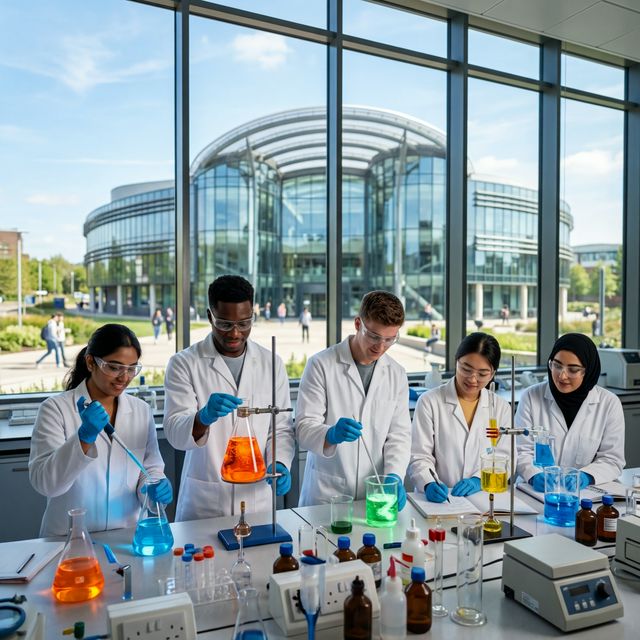
MBio Biological Sciences with Industrial Placement
About this course
Biological sciences is the study of living systems in their full complexity, from the molecules and cells that are the building blocks of life to the organisms, populations and ecosystems in which life unfolds. It is one of the most diverse of the scientific disciplines, encompassing genetics, cell biology, physiology, ecology, evolution and much more, and it connects to some of the most important questions facing human societies, from the development of medicines and the management of infectious disease to the conservation of biodiversity and the understanding of how life on Earth originated and diversified. At the University of Warwick, this four-year programme with industrial placement is the most flexible of the School of Life Sciences degree courses in terms of module choice. You will study the molecules and cells that are the basis of life through to the biology of organisms, including animals, plants, bacteria and viruses, and populations, including evolution, the epidemiology of disease and the dynamics of ecosystems. The breadth of the programme means you develop a wide scientific literacy that allows you to engage with the full span of modern biology. The industrial placement component gives you an extended period of professional experience in a relevant biological context, allowing you to apply your knowledge in industry or research settings and to build the professional relationships and practical skills that employers value. Graduates of biological sciences programmes move into a wide range of careers. The life sciences industry, including pharmaceuticals, biotechnology and medical devices, employs biological scientists in research, development and regulatory roles. Healthcare, environmental consulting, conservation, scientific publishing, science education and government agencies working in health, agriculture and the environment are all common destinations. Many graduates pursue postgraduate research, which leads into academic careers or into specialist technical roles in industry. The combination of broad scientific training and industrial placement experience makes graduates of this programme particularly competitive in the life sciences job market.
Syllabus & Modules
Typical curriculumStudent Satisfaction
National Student Survey - 175 respondents (73% response rate)
Similarly Ranked Alternatives


What comes next? 🎓
Choosing the right university starts with choosing the right school. Explore transparent, data-driven school profiles powered by official DfE statistics.
Explore Schools on WhatSchool.ai →